
In the rapidly evolving world of Software as a Service (SaaS), understanding the intricacies of Service Level Agreements (SLAs) is paramount for both providers and consumers. An SLA serves as a critical contract that defines the level of service expected by a customer from a SaaS provider, outlining key metrics such as uptime, performance, and support response times. This comprehensive overview delves into the core components of SLAs in the SaaS landscape, offering insights into their importance and how they contribute to a successful vendor-client relationship. Understanding these agreements is crucial for risk management and ensuring business continuity.
This article aims to provide a comprehensive understanding of SLAs in the SaaS environment, covering key aspects like what constitutes a robust SLA, the types of metrics commonly included, and the repercussions of failing to meet the agreed-upon service levels. Whether you are a business considering adopting a SaaS solution or a provider looking to establish clear service standards, this guide will equip you with the knowledge to navigate the complexities of SLAs and foster transparency and trust between SaaS vendors and their clients. Furthermore, we will discuss the importance of regular monitoring and reporting within the SLA framework.
What is a Service Level Agreement (SLA)?
A Service Level Agreement (SLA) is a contractual agreement between a service provider and a customer. In the context of Software as a Service (SaaS), an SLA specifically outlines the levels of performance, availability, and support that the SaaS provider commits to deliver to the customer.
Essentially, an SLA serves as a guarantee regarding the quality of service. It defines what happens if the service falls below the agreed-upon standards. This includes remedies such as service credits or other forms of compensation.
Key aspects typically covered in an SLA include:
- Uptime Guarantees: Percentage of time the service is available.
- Performance Metrics: Response times, throughput, and error rates.
- Support Response Times: Timeframe for addressing customer inquiries.
- Security Measures: Protections implemented to safeguard data.
By establishing clear expectations and accountability, SLAs are vital tools for managing the provider-customer relationship in the SaaS landscape.
Key Components of an SLA in SaaS
A Service Level Agreement (SLA) in SaaS is a critical document outlining the performance standards a provider commits to deliver. Several key components are essential for a robust and effective SLA.
Service Description: This section clearly defines the services covered by the SLA, including their functionalities and limitations. Ambiguity here can lead to disputes.
Uptime Guarantee: Perhaps the most vital, this specifies the percentage of time the service will be available. For example, a 99.9% uptime guarantee allows for approximately 43 minutes of downtime per month.
Performance Metrics: These are quantifiable measures of service performance, such as response time, throughput, and error rates. Define acceptable thresholds for each metric.
Support Response Times: Specify the timeframes within which the provider will respond to support requests based on severity levels (e.g., critical, high, medium, low).
Escalation Procedures: Outline the steps taken when service levels fall below the agreed-upon standards. This includes who to contact and within what timeframe.
Penalties and Credits: Detail the consequences for failing to meet the SLA terms. This often involves service credits applied to future bills.
Security Provisions: Describe the security measures implemented to protect data and ensure service integrity.
Why are SLAs Important for SaaS Businesses and Customers?
Service Level Agreements (SLAs) are crucial for both SaaS businesses and their customers because they establish clear expectations and responsibilities. For businesses, SLAs offer a framework to define service standards, manage customer expectations, and differentiate themselves in a competitive market. They also help in risk management by outlining potential penalties for not meeting agreed-upon service levels.
For customers, SLAs provide assurance regarding the quality and reliability of the SaaS service. They offer a mechanism for holding providers accountable and seeking redress if performance falls short. This can lead to increased trust and satisfaction, fostering long-term relationships. An effective SLA empowers customers to make informed decisions about which SaaS solutions best fit their business needs and protects their interests.
Common Metrics to Include in Your SaaS SLA
A Service Level Agreement (SLA) in the SaaS context relies heavily on measurable metrics to define the level of service provided. These metrics ensure clarity and accountability between the SaaS provider and the customer.
Here are some common metrics frequently found in SaaS SLAs:
- Uptime Percentage: This is the most critical metric, indicating the percentage of time the service is available. Common targets are 99.9% (“three nines”) or higher.
- Response Time: Measures the time it takes for the system to respond to a user request. Faster response times contribute to better user experience.
- Resolution Time: The time taken to resolve reported issues or incidents. This metric directly affects customer satisfaction.
- Error Rate: The frequency of errors or bugs encountered by users. A lower error rate signifies a more stable and reliable service.
- Data Backup Frequency: Describes how often data is backed up. This metric ensures data recovery in case of unforeseen events.
- Customer Support Responsiveness: Measures the time it takes for customer support to respond to inquiries or requests.
The specific metrics included will vary depending on the nature of the SaaS offering and the customer’s requirements. It’s important to clearly define these metrics in the SLA.
Best Practices for Creating and Managing SaaS SLAs
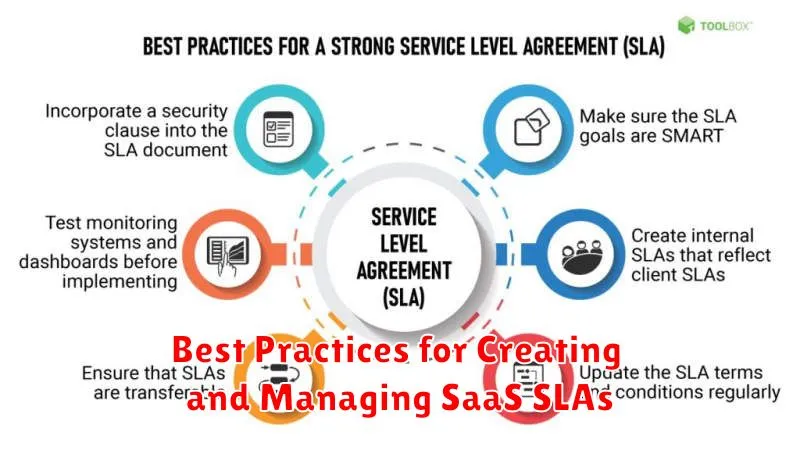
Creating and managing effective SaaS SLAs requires a strategic approach focused on clarity, transparency, and continuous improvement. Clearly define the scope of services covered, setting realistic and measurable expectations for both the SaaS provider and the customer.
Proactive communication is crucial. Establish regular reporting mechanisms to keep customers informed about performance against the agreed-upon metrics. This fosters trust and allows for timely identification and resolution of potential issues. Actively monitor performance and establish a clear process for dispute resolution and handling escalations.
Regularly review and update the SLA to reflect changes in technology, business requirements, and customer needs. This ensures the SLA remains relevant and effective over time. Consider including provisions for periodic reviews and updates, incorporating feedback from both the provider and the customer. Document all changes and ensure all parties agree upon the updated terms.
The Consequences of Not Meeting SLA Terms
Failure to adhere to the terms outlined in a Service Level Agreement (SLA) can lead to a variety of repercussions for a SaaS provider. These consequences are designed to incentivize adherence to the agreed-upon service levels and protect the customer’s interests.
Financial Penalties
Often, SLAs include provisions for financial penalties in the event of service failures. This may involve service credits, refunds, or discounts on future services. The specific amount and conditions for these penalties are typically detailed within the SLA document.
Reputational Damage
Beyond financial implications, consistently failing to meet SLA terms can result in reputational damage. Dissatisfied customers may share their negative experiences, leading to a loss of trust and potentially impacting future business.
Contract Termination
In severe cases, or after repeated SLA violations, customers may have the right to terminate the contract. This can result in a significant loss of revenue and customers for the SaaS provider.
How to Measure and Report on SLA Performance
Measuring and reporting on Service Level Agreement (SLA) performance is crucial for maintaining transparency and accountability. It allows both the SaaS provider and the customer to understand if the agreed-upon service levels are being met.
Key steps include:
- Data Collection: Implement robust monitoring tools to collect data on relevant metrics like uptime, response time, and error rates.
- Performance Analysis: Regularly analyze the collected data to identify trends, patterns, and potential issues.
- Reporting: Generate clear, concise reports that summarize SLA performance against agreed-upon targets. These reports should be delivered to stakeholders on a predefined schedule (e.g., weekly, monthly, quarterly).
- Transparency: Ensure transparency by providing customers with access to real-time dashboards or regular reports on SLA performance.
Effective measurement and reporting not only demonstrate compliance but also provide valuable insights for service improvement.
Examples of Real-World SaaS SLA Scenarios
To illustrate how Service Level Agreements (SLAs) function in practice, consider these scenarios:
- Scenario 1: Uptime Guarantee for a CRM Platform. A SaaS CRM provider guarantees 99.9% uptime. If the service falls below this level, customers receive credits proportional to the downtime experienced.
- Scenario 2: Response Time for a Help Desk System. A help desk software vendor promises a first response time of under one hour for critical support tickets. Failure to meet this target results in a penalty, such as extended support hours.
- Scenario 3: Data Recovery for a Backup Service. A data backup and recovery service guarantees a Recovery Time Objective (RTO) of four hours. Should a data loss incident occur, the company must restore the data within four hours or face financial repercussions.
These examples demonstrate how SLAs define performance expectations and outline the consequences of failing to meet those expectations in various SaaS contexts.
Future Trends in SaaS SLAs
The landscape of Service Level Agreements (SLAs) in SaaS is continuously evolving, driven by technological advancements and changing customer expectations. Several key trends are shaping the future of how these agreements are structured and managed.
- AI-Powered Monitoring and Automation: Expect increased use of artificial intelligence to monitor SLA performance in real-time, automate issue detection, and proactively address potential breaches.
- Dynamic and Adaptive SLAs: Traditional static SLAs will likely be replaced by more dynamic agreements that can adapt to changing business needs and usage patterns.
- Increased Focus on Customer Experience (CX) Metrics: Beyond uptime and response time, future SLAs will incorporate metrics that directly reflect the user’s experience, such as customer satisfaction scores and Net Promoter Score (NPS).
- Greater Transparency and Reporting: Customers will demand more detailed and transparent reporting on SLA performance, with easily accessible dashboards and real-time updates.
- Standardization and Industry Benchmarks: Efforts to standardize SLA metrics and establish industry benchmarks will help customers better compare and evaluate different SaaS providers.
These trends suggest a future where SaaS SLAs are more intelligent, adaptable, and customer-centric, ultimately leading to stronger partnerships and improved service delivery.
SLA vs. Other Agreements: MSA, NDA, and More
While a Service Level Agreement (SLA) defines the level of service a customer can expect from a SaaS provider, it is crucial to differentiate it from other legal agreements. Often, an SLA is incorporated as part of a larger contract, such as a Master Service Agreement (MSA).
A Master Service Agreement (MSA) outlines the broader terms and conditions of the business relationship, including payment terms, intellectual property rights, and liability limitations. The SLA then specifies the details of the service itself, such as uptime guarantees and support response times.
A Non-Disclosure Agreement (NDA), on the other hand, focuses on protecting confidential information. It is a separate agreement altogether and does not directly relate to the level of service provided. NDAs ensure that sensitive data shared between the SaaS provider and the customer remains confidential.
In summary, while all these agreements are important for establishing a clear and legally sound relationship, they serve different purposes. The SLA specifically focuses on defining and guaranteeing service performance metrics.
