
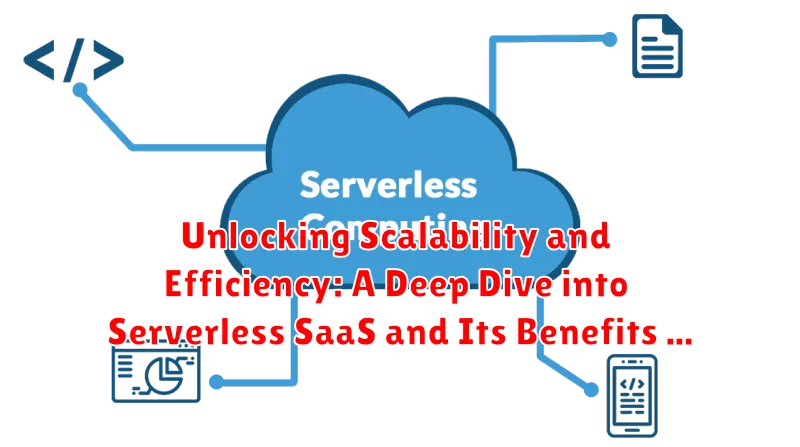
In today’s rapidly evolving technological landscape, Software as a Service (SaaS) businesses are constantly seeking innovative solutions to achieve scalability, efficiency, and cost-effectiveness. A pivotal advancement in this pursuit is the adoption of serverless architecture, a paradigm shift that significantly alters the way SaaS applications are developed, deployed, and managed. This article provides a deep dive into the world of Serverless SaaS, exploring its core principles and elucidating how it empowers businesses to optimize their resources and focus on core competencies, ultimately unlocking unprecedented levels of performance and agility. We’ll discuss how this model departs from traditional infrastructure management by abstracting away the complexities of server provisioning and maintenance, allowing developers to concentrate on writing code and delivering value to their customers.
This comprehensive exploration will unpack the multifaceted benefits of embracing serverless SaaS, including enhanced scalability to effortlessly handle fluctuating workloads, reduced operational overhead through automated infrastructure management, and significant cost savings by only paying for compute resources when they are actively in use. We will delve into real-world examples of how various SaaS companies are leveraging serverless technologies to gain a competitive edge. The discussion will also address potential challenges and best practices for successful serverless SaaS implementation, equipping readers with the knowledge and insights necessary to make informed decisions about their own infrastructure strategies and potentially move their business toward serverless architectures. This approach allows for faster innovation cycles, reduced time-to-market, and increased overall business agility.
What Exactly is Serverless SaaS?
Serverless SaaS represents a transformative approach to software delivery, merging the benefits of Serverless computing with the Software as a Service (SaaS) model. In essence, it’s a SaaS application built and deployed using a serverless architecture.
Traditionally, SaaS providers manage servers to host their applications. With Serverless SaaS, the underlying infrastructure management—including provisioning, scaling, and maintenance—is abstracted away and handled by a third-party cloud provider. This allows SaaS vendors to focus primarily on building and enhancing their application’s core functionality.
Key aspects of Serverless SaaS include:
- Event-Driven Architecture: Applications react to specific triggers, executing code only when needed.
- Automatic Scaling: Resources scale automatically based on demand, ensuring optimal performance.
- Pay-Per-Use Pricing: Organizations only pay for the compute resources consumed during execution.
Understanding the Core Concepts of Serverless Architecture
Serverless architecture represents a paradigm shift in cloud computing, abstracting away the underlying server infrastructure from developers. This allows them to focus solely on writing and deploying code without the burden of server management.
At its core, serverless is characterized by the following principles:
- No Server Management: Developers do not need to provision, scale, or maintain servers. The cloud provider handles all infrastructure management.
- Event-Driven Execution: Code execution is triggered by events, such as HTTP requests, database updates, or scheduled tasks.
- Automatic Scaling: The platform automatically scales resources up or down based on demand, ensuring optimal performance without manual intervention.
- Pay-Per-Use Billing: Users are charged only for the actual compute time consumed, leading to significant cost savings compared to traditional server-based models.
Common serverless technologies include AWS Lambda, Azure Functions, and Google Cloud Functions. These platforms enable developers to deploy functions or microservices that execute in response to events, providing a highly scalable and cost-effective solution for various applications.
Key Characteristics That Define a Serverless SaaS Platform
A Serverless Software as a Service (SaaS) platform is defined by several core characteristics that distinguish it from traditional SaaS models. These features contribute to its enhanced scalability, efficiency, and cost-effectiveness.
Automatic Scaling
Automatic scaling is a fundamental characteristic. The platform automatically adjusts computing resources based on demand, ensuring optimal performance without manual intervention. This dynamic resource allocation is crucial for handling unpredictable workloads.
Pay-Per-Use Billing
Pay-per-use billing offers significant cost advantages. Users are charged only for the actual resources consumed, eliminating the need for upfront infrastructure investments and minimizing operational expenses.
Event-Driven Architecture
Many Serverless SaaS platforms leverage an event-driven architecture. This means that functions are triggered by specific events, such as API requests or data updates. This approach enhances responsiveness and optimizes resource utilization.
Stateless Functions
Serverless functions are typically stateless, meaning they do not retain data between invocations. This promotes scalability and simplifies deployment, as each function instance operates independently.
Managed Infrastructure
The underlying infrastructure is fully managed by the cloud provider. This relieves developers from the burden of server maintenance, patching, and other operational tasks, allowing them to focus on building and deploying applications.
Benefits of Adopting a Serverless SaaS Model: Why Choose Serverless?
Adopting a serverless SaaS model offers numerous advantages over traditional infrastructure. The primary driver for many businesses is the reduced operational overhead. With serverless, organizations no longer need to manage servers, operating systems, or scaling infrastructure.
This translates to a significant reduction in administrative tasks and allows IT teams to focus on core business logic and innovation, rather than infrastructure maintenance. Furthermore, serverless architectures inherently provide automatic scaling, ensuring applications can handle varying workloads without manual intervention.
Another key benefit is the pay-per-use pricing model. You only pay for the actual compute time consumed, leading to substantial cost savings compared to always-on server environments. In addition, serverless architectures promote faster development cycles. Developers can deploy code more quickly and iterate more rapidly, resulting in faster time-to-market for new features and applications.
Cost Optimization with Serverless SaaS
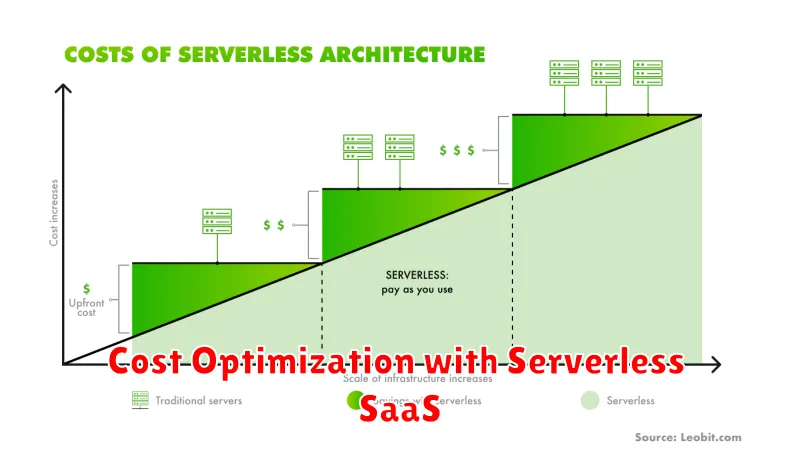
One of the most compelling advantages of serverless SaaS is its potential for significant cost optimization. Traditional infrastructure models often require businesses to pay for server capacity regardless of actual usage. With serverless, you only pay for the compute time consumed when your functions are executed.
This pay-as-you-go model eliminates the need for over-provisioning, reducing wasted resources and lowering operational expenses. Furthermore, serverless platforms typically handle infrastructure management, patching, and scaling, freeing up valuable engineering time and reducing the need for specialized DevOps personnel, further contributing to cost savings.
Consider these key areas for cost optimization:
- Reduced Infrastructure Costs: Eliminates the need to purchase, maintain, and power servers.
- Lower Operational Overhead: Reduces the burden on DevOps teams.
- Efficient Resource Utilization: Pays only for executed code.
Scalability and Performance Advantages of Serverless SaaS
Serverless SaaS offers inherent advantages in scalability and performance due to its architectural design. Applications automatically scale in response to demand, ensuring optimal resource allocation without manual intervention. This dynamic scaling capability allows businesses to handle traffic spikes and fluctuating user loads seamlessly, preventing performance degradation.
The pay-as-you-go model further enhances efficiency. Resources are only consumed when the application is actively processing requests, leading to significant cost savings compared to traditional infrastructure models. Moreover, serverless platforms often provide built-in features for load balancing and fault tolerance, contributing to improved uptime and reliability.
Here’s a brief overview of the key benefits:
- Automatic Scaling: Dynamically adjust resources based on real-time demand.
- Improved Performance: Faster response times due to optimized resource allocation.
- Enhanced Reliability: Built-in fault tolerance and high availability.
Enhanced Security Features in Serverless SaaS Environments
Serverless SaaS environments offer distinct security advantages compared to traditional infrastructure models. Because providers manage the underlying infrastructure, including operating systems and patching, the burden of many common security tasks shifts away from the SaaS vendor.
Key features contributing to enhanced security include:
- Reduced Attack Surface: With less infrastructure to manage, the attack surface is significantly smaller, limiting potential vulnerabilities.
- Automatic Updates and Patching: The serverless provider handles infrastructure security, ensuring systems are up-to-date with the latest security patches.
- Granular Access Control: Serverless functions can be configured with fine-grained permissions, limiting access to only the resources they require, following the principle of least privilege.
- Built-in Security Services: Serverless platforms often integrate with security services like intrusion detection, vulnerability scanning, and DDoS protection.
While serverless enhances security, SaaS vendors still retain responsibility for securing their applications and data. Proper code security, authentication, and data encryption remain critical.
Use Cases for Serverless SaaS: Where Does It Shine?
Serverless SaaS solutions are particularly well-suited for a variety of use cases where scalability, cost-efficiency, and rapid development are crucial.
Here are a few key areas where Serverless SaaS excels:
- Media Streaming: Handling fluctuating user demand for video and audio content is easily managed.
- Data Processing: Efficiently processing large datasets, such as image recognition or log analysis, without managing servers.
- Web Applications: Building highly scalable web applications with dynamic content and microservices architectures.
- Mobile Backends: Providing reliable and scalable backend services for mobile applications, including user authentication and data storage.
- API Gateways: Managing and securing APIs at scale with minimal operational overhead.
The event-driven nature of serverless allows for seamless integration with other services and rapid response to triggers, making it an ideal choice for these scenarios.
Challenges and Considerations When Implementing Serverless SaaS
Adopting a serverless SaaS model offers numerous advantages, but it also presents unique challenges that organizations must address for successful implementation. Careful planning and consideration are crucial to mitigating potential risks.
Vendor Lock-In
One significant concern is potential vendor lock-in. Choosing a specific serverless provider may limit future flexibility and increase switching costs. Evaluating provider compatibility and adherence to open standards is essential.
Cold Starts
Cold starts can impact application latency. When a function hasn’t been executed recently, the initial invocation can experience a delay. Optimizing function size and leveraging techniques like provisioned concurrency can help minimize cold start times.
Debugging and Monitoring
Debugging and monitoring distributed serverless applications can be complex. Traditional debugging tools may not be directly applicable. Robust logging, tracing, and monitoring solutions are necessary for identifying and resolving issues effectively.
Security Considerations
While serverless can enhance security, it also introduces new vulnerabilities. Proper identity and access management (IAM), secure coding practices, and regular security audits are critical for protecting serverless applications.
Future Trends in Serverless SaaS
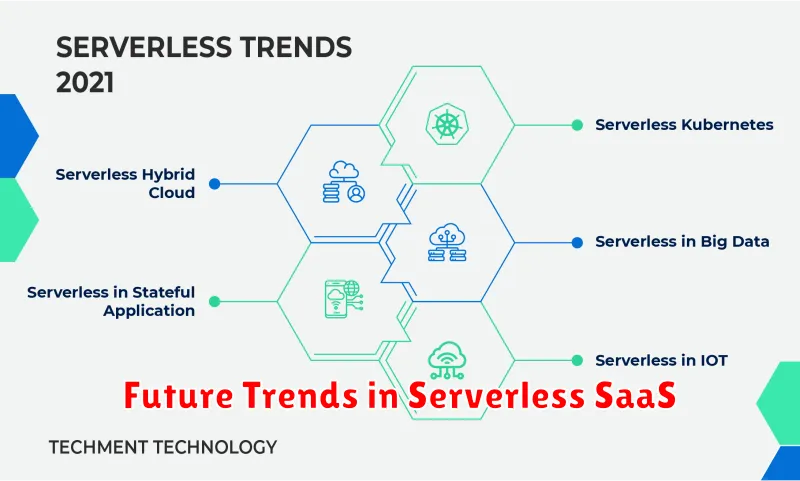
The landscape of Serverless SaaS is rapidly evolving, driven by technological advancements and increasing demand for scalable and cost-effective solutions. Several key trends are poised to shape its future trajectory.
Emerging Trends:
- Edge Computing Integration: Deploying serverless functions closer to the data source for reduced latency and improved user experience.
- AI/ML Integration: Leveraging serverless platforms to build and deploy AI/ML models more efficiently, enabling intelligent SaaS applications.
- Enhanced Observability: Improved monitoring and tracing tools will provide deeper insights into serverless application performance, facilitating better debugging and optimization.
- Standardization and Interoperability: Increased adoption of open standards will promote seamless integration between different serverless platforms and services.
- Low-Code/No-Code Serverless: Democratizing serverless development by enabling citizen developers to build and deploy applications with minimal coding.
These trends indicate a future where Serverless SaaS becomes even more accessible, powerful, and integral to business operations.
