
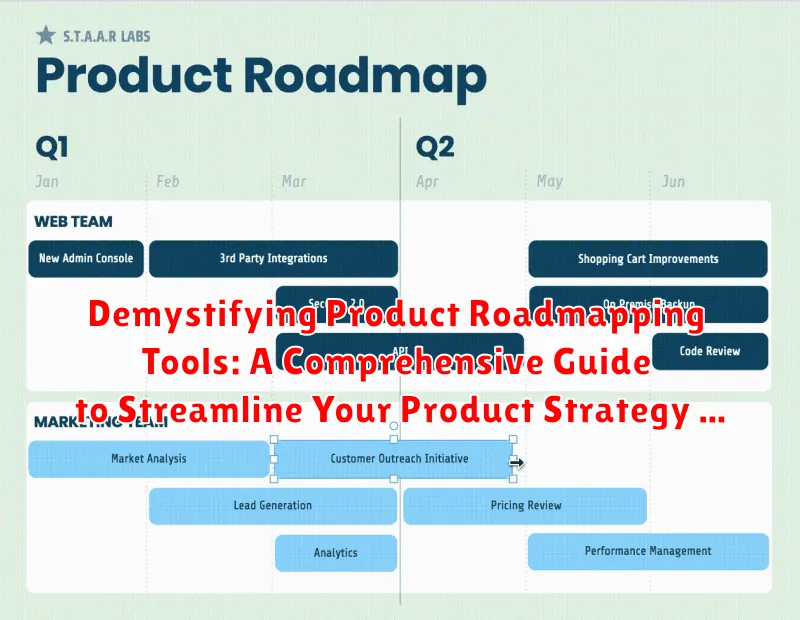
Are you looking to revolutionize your product strategy and ensure seamless execution? In today’s fast-paced business environment, having a clear and adaptable product roadmap is crucial for success. This article, “Demystifying Product Roadmapping Tools: A Comprehensive Guide to Streamline Your Product Strategy,” is designed to provide you with a thorough understanding of how the right product roadmapping tools can transform your vision into reality. We’ll explore the key features, benefits, and functionalities these tools offer, helping you navigate the complex landscape of product development and achieve your strategic goals.
This guide caters to product managers, project managers, and anyone involved in product planning and execution across various industries worldwide. Whether you’re a seasoned professional or new to the world of product roadmapping, we will break down the complexities and present actionable insights. Learn how to select the optimal product roadmapping tool that aligns with your team’s needs, budget, and organizational structure, ultimately leading to enhanced collaboration, improved communication, and a more streamlined product development lifecycle. Get ready to unlock the power of strategic product roadmaps and drive your business forward.
What is a Product Roadmap and Why is it Important?
A product roadmap is a high-level visual summary that outlines the direction of a product’s development over time. It articulates the vision, strategy, priorities, and progress of the product. It’s a shared resource used to align internal teams and communicate plans to stakeholders.
Why is it important?
- Alignment: Ensures everyone understands the product vision and direction.
- Communication: Clearly communicates plans to stakeholders, fostering transparency.
- Prioritization: Helps to focus on the most impactful features and initiatives.
- Strategic Planning: Guides product development in a strategic and coherent manner.
- Adaptability: Provides a flexible framework for adapting to changing market conditions and user feedback.
Key Features to Look for in a Product Roadmapping Tool
When selecting a product roadmapping tool, it is crucial to consider several key features that will significantly impact its effectiveness within your organization. Prioritizing these features will enable seamless product strategy execution and alignment.
Essential Features:
- Visualization and Customization: Look for tools that offer flexible visualization options (e.g., Gantt charts, timeline views, Kanban boards) and allow customization to fit your specific needs and preferences.
- Collaboration Capabilities: Choose a tool that facilitates seamless collaboration among team members, stakeholders, and customers. Features like commenting, real-time updates, and access control are essential.
- Integration with Other Tools: Ensure the tool integrates with your existing business systems (e.g., project management software, CRM, development tools) for streamlined workflows and data consistency.
- Prioritization Frameworks: A robust tool will offer various prioritization frameworks (e.g., RICE scoring, MoSCoW method) to help you objectively prioritize features and initiatives.
- Reporting and Analytics: The tool should provide comprehensive reporting and analytics capabilities to track progress, measure success, and identify areas for improvement.
By carefully evaluating these key features, you can select a product roadmapping tool that best meets your organization’s needs and supports effective product strategy execution.
Different Types of Product Roadmapping Tools Available
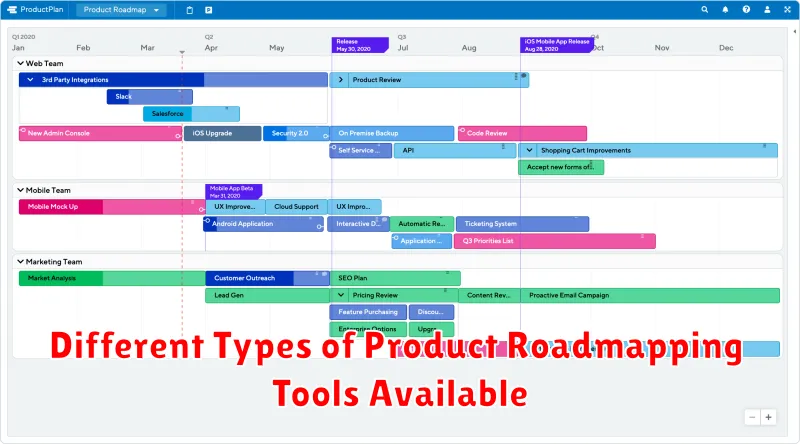
The landscape of product roadmapping tools is diverse, catering to various needs and organizational structures. Understanding the different types available is crucial for selecting the one that best aligns with your specific requirements.
Dedicated Roadmapping Software
These tools are specifically designed for creating and managing product roadmaps. They offer features such as timeline visualization, dependency tracking, and collaboration capabilities. Examples include Productboard and Aha!
Project Management Tools with Roadmapping Features
Some project management platforms include roadmapping functionalities. These tools are suitable for teams that require integrated project planning and roadmap management. Popular options include Asana and Jira.
Spreadsheet-Based Roadmaps
Using spreadsheets like Google Sheets or Microsoft Excel is a basic approach. While lacking advanced features, they offer flexibility and are suitable for simple roadmaps or teams with limited resources.
Presentation Software
Tools like PowerPoint or Google Slides can be used to create visual roadmaps for presentations. These are often static and less suited for ongoing management.
How to Effectively Use a Product Roadmapping Tool in Your Organization
Integrating a product roadmapping tool into your organization requires a strategic approach to ensure its effectiveness. This involves more than just selecting the right tool; it requires a change in mindset and workflow.
Establish Clear Objectives
Before implementation, define your key objectives. What problems are you trying to solve? What improvements are you hoping to achieve? Clear objectives will guide your tool selection and usage.
Training and Onboarding
Provide comprehensive training to all team members who will be using the tool. Ensure everyone understands its features, functionalities, and how it aligns with the overall product strategy. A proper onboarding process will minimize confusion and maximize adoption.
Regular Review and Updates
The product roadmap should be a living document, not a static plan. Schedule regular review meetings to assess progress, identify potential roadblocks, and make necessary adjustments. This ensures that the roadmap remains relevant and aligned with evolving business goals.
Encourage Collaboration and Feedback
Foster a culture of collaboration by encouraging team members to contribute their ideas and feedback. A product roadmapping tool should facilitate open communication and transparency, allowing everyone to stay informed and aligned.
Benefits of Implementing a Product Roadmapping Tool
Implementing a product roadmapping tool offers numerous advantages for organizations seeking to optimize their product development process. These tools provide a centralized platform for visualizing and communicating product strategy, leading to enhanced alignment across teams and stakeholders.
Key benefits include:
- Improved Strategic Alignment: Ensures everyone is on the same page regarding product direction.
- Enhanced Communication: Facilitates clear and consistent communication of product plans.
- Better Prioritization: Enables data-driven decision-making for feature prioritization.
- Increased Efficiency: Streamlines the product development process by providing a clear roadmap.
- Enhanced Stakeholder Management: Keeps stakeholders informed and engaged throughout the product lifecycle.
By leveraging a product roadmapping tool, businesses can foster a more collaborative and strategic approach to product development, ultimately leading to improved product outcomes and greater market success.
Integrating Your Product Roadmapping Tool with Other Business Systems
Integrating your product roadmapping tool with other business systems is crucial for fostering alignment and ensuring data-driven decision-making. This integration allows for a seamless flow of information across different departments and provides a holistic view of the product lifecycle.
Here are some key systems that should be considered for integration:
- CRM (Customer Relationship Management): Integrate to gain insights into customer feedback and support requests, informing product priorities.
- Project Management Software: Connect to track task progress, resource allocation, and project timelines related to roadmap items.
- Analytics Platforms: Link to monitor key performance indicators (KPIs) and measure the impact of product releases.
- Communication Tools: Integrate for notifications and updates related to roadmap changes or upcoming features.
By connecting your product roadmap with these systems, you can ensure that product decisions are aligned with business goals, customer needs, and market trends.
Common Challenges and Solutions When Using Product Roadmapping Tools
Implementing product roadmapping tools can present certain challenges. A common issue is lack of team alignment. This often arises when stakeholders have differing priorities. The solution involves establishing clear communication channels and facilitating collaborative workshops to ensure everyone is on the same page regarding product vision and strategic goals.
Another frequent challenge is data overload. Roadmaps can become cluttered with excessive details, hindering clarity. Addressing this requires focusing on high-level initiatives and using features like filtering and grouping to manage complexity. Regular reviews and pruning of outdated information are also crucial.
Resistance to change can also be an obstacle, especially in organizations accustomed to traditional methods. To overcome this, emphasize the benefits of the tool, provide comprehensive training, and champion early successes to demonstrate its value. A phased rollout can also ease the transition.
Finally, inadequate tool integration with existing systems can limit its effectiveness. Ensure seamless integration with project management, CRM, and other relevant platforms to maintain data consistency and streamline workflows. Leverage API integrations where available.
Best Practices for Maintaining an Up-to-Date Product Roadmap
Maintaining an up-to-date product roadmap is crucial for ensuring its continued relevance and effectiveness. A stagnant roadmap quickly becomes obsolete and loses its value as a strategic communication and planning tool. Here are some best practices to keep your roadmap current:
Regular Review and Updates
Schedule recurring meetings to review the roadmap, typically monthly or quarterly. These reviews should involve key stakeholders from product, engineering, marketing, and sales.
Gather Continuous Feedback
Actively solicit feedback from internal teams, customers, and market research. Incorporate this feedback into roadmap updates to reflect evolving needs and priorities. Utilize surveys, user interviews, and feedback portals to gather insights.
Prioritize Ruthlessly
Regularly re-evaluate the prioritization of features and initiatives on the roadmap. Market conditions change, new opportunities emerge, and some projects may prove less valuable than initially anticipated. Be willing to remove or deprioritize items that no longer align with the overall strategy.
Communicate Changes Transparently
Whenever updates are made to the roadmap, communicate these changes clearly and promptly to all stakeholders. Explain the rationale behind the changes and the impact they will have on timelines and deliverables. Use the roadmapping tool’s notification features or email updates to keep everyone informed.
Track Progress and Adjust as Needed
Monitor the progress of features and initiatives on the roadmap and identify any potential roadblocks or delays. Use this information to adjust timelines and resource allocations as needed.
The Future of Product Roadmapping Tools
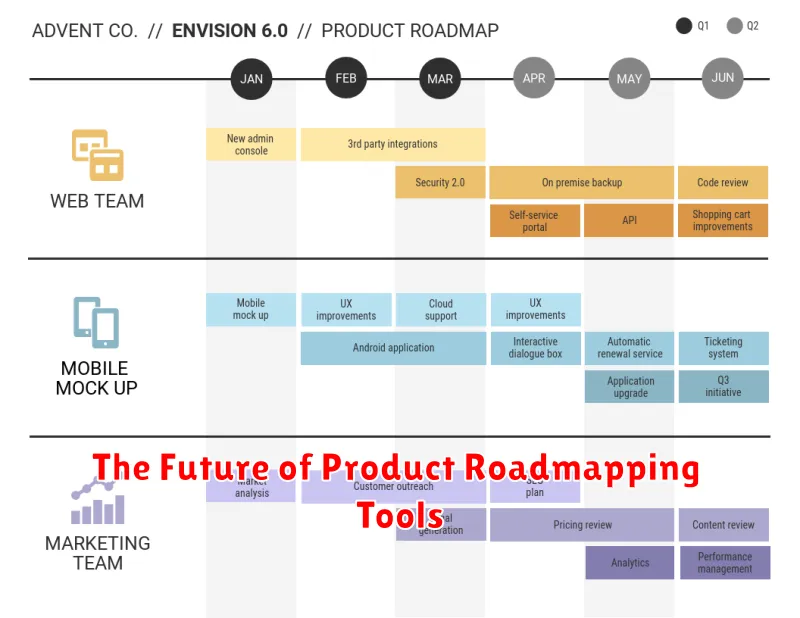
The future of product roadmapping tools is poised for significant evolution, driven by advancements in artificial intelligence (AI), machine learning (ML), and enhanced data analytics capabilities. Expect to see more predictive features that anticipate potential roadblocks and suggest optimized paths based on historical data and market trends.
Integration will become even more seamless, allowing real-time data flow between roadmapping tools and other business systems like CRM, project management software, and analytics platforms. This will foster a more holistic view of the product lifecycle.
Furthermore, collaboration features will be enhanced to facilitate better communication and alignment among cross-functional teams. Interactive simulations and scenario planning will also likely become more prevalent, enabling product managers to visualize and evaluate the impact of different strategic decisions.
Finally, expect increased focus on user experience, with more intuitive interfaces and customizable dashboards to cater to diverse user needs and preferences.
Measuring the Success of Your Product Roadmap with Key Metrics
Determining the success of your product roadmap requires careful tracking of relevant metrics. These metrics provide valuable insights into whether your roadmap is effectively guiding product development and achieving desired business outcomes.
Key Metrics to Consider:
- On-Time Delivery: Measure the percentage of features and milestones delivered within the planned timeframe.
- Feature Adoption Rate: Track how quickly and widely new features are adopted by users.
- Customer Satisfaction (CSAT): Monitor customer satisfaction levels related to new product releases and features.
- Net Promoter Score (NPS): Assess customer loyalty and advocacy based on roadmap-driven improvements.
- Return on Investment (ROI): Evaluate the financial impact of product initiatives outlined in the roadmap.
Regularly analyzing these metrics allows you to identify areas for improvement, refine your roadmap strategy, and ensure alignment with overall business goals. By monitoring progress against these key indicators, you can objectively assess the effectiveness of your product roadmap and make data-driven adjustments as needed.
