
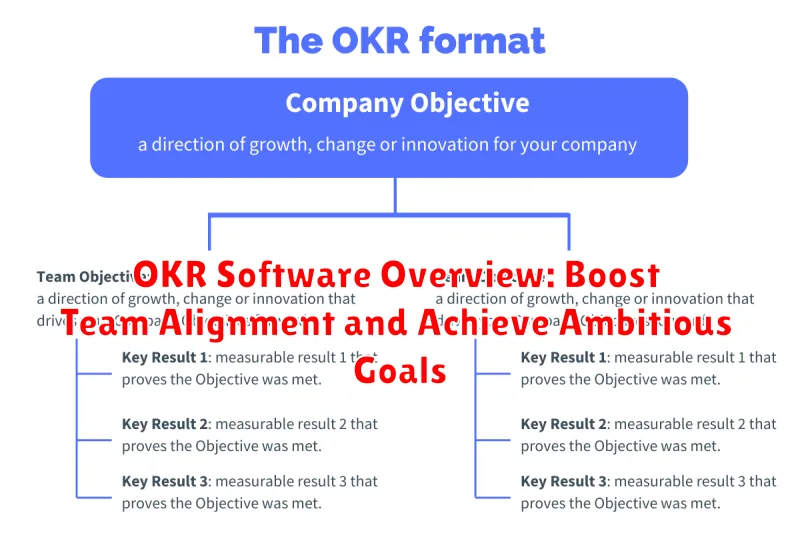
In today’s fast-paced business environment, achieving ambitious goals requires more than just hard work; it demands strategic planning and team alignment. OKR software emerges as a crucial tool for organizations seeking to streamline their objective-setting process. This overview explores how OKR (Objectives and Key Results) software facilitates the implementation of this popular goal-setting framework, helping teams define measurable results and track progress towards overall company objectives. Discover how leveraging the right OKR platform can transform your organization’s performance and drive impactful results across departments.
This article provides a comprehensive OKR software overview, examining key features, benefits, and considerations for selecting the optimal platform for your organization’s needs. We will delve into how OKR tools foster transparency, improve communication, and enhance accountability. By implementing a robust OKR software solution, businesses can ensure that every team member is working towards shared, well-defined objectives, leading to increased efficiency and a greater likelihood of achieving strategic goals. Understanding the power of OKR software is the first step towards unlocking your team’s full potential and achieving remarkable growth.
What are OKRs (Objectives and Key Results)?
OKRs, which stands for Objectives and Key Results, are a goal-setting framework used to define measurable goals and track their outcomes. This methodology helps organizations define what they want to achieve (Objectives) and how they will measure progress towards that achievement (Key Results).
An Objective is a qualitative, inspirational, and aspirational description of what you want to achieve. It should be ambitious and challenging.
Key Results are a set of quantitative metrics that measure your progress toward the Objective. They should be specific, measurable, achievable, relevant, and time-bound (SMART).
In essence, OKRs provide a clear roadmap for individuals and teams, ensuring everyone is working towards the same strategic goals and that progress is easily tracked and evaluated.
The Benefits of Using OKR Software
Implementing OKR software offers numerous advantages for organizations aiming to enhance performance and achieve strategic objectives. One primary benefit is enhanced transparency. OKR software centralizes goal-setting and progress tracking, making objectives and key results visible across the entire organization. This fosters a shared understanding of priorities and promotes accountability.
Furthermore, OKR software facilitates improved alignment. By providing a clear view of how individual and team goals contribute to overarching organizational objectives, it ensures everyone is working towards the same outcomes. This alignment reduces wasted effort and promotes synergy.
Increased efficiency is another significant benefit. Automation of tasks such as progress updates and reporting saves time and resources, allowing teams to focus on execution. Moreover, data-driven insights provided by the software enable informed decision-making and continuous improvement in the OKR process.
Finally, using OKR software typically leads to better communication among teams. Through automated notifications and collaboration features, team members are kept informed about progress and any roadblocks encountered. This fosters a more collaborative and results-oriented work environment.
Key Features of Effective OKR Software
Effective OKR (Objectives and Key Results) software solutions offer a range of features designed to streamline the goal-setting and tracking process. These features are crucial for ensuring successful implementation and maximizing the benefits of the OKR framework.
Key Feature Categories
- Objective and Key Result Definition: Intuitive interfaces for creating, editing, and organizing OKRs. This includes the ability to define measurable key results and align them with broader organizational objectives.
- Progress Tracking and Reporting: Real-time dashboards that provide clear visibility into progress against key results. Automated reports help monitor performance and identify potential roadblocks.
- Collaboration and Communication: Features that facilitate communication and collaboration among team members. This may include comment sections, progress updates, and integration with communication platforms.
- Alignment and Hierarchy: Tools to visualize the alignment of individual, team, and organizational OKRs. Hierarchical structures enable a clear understanding of how each contribution drives overall success.
- Integrations: Seamless integration with other business tools, such as project management software, CRM systems, and data analytics platforms.
- Customization: Flexible configurations to adapt the software to specific organizational needs and workflows.
How OKR Software Improves Team Alignment
OKR software significantly enhances team alignment by providing a centralized platform for defining, tracking, and managing objectives and key results.
Here’s how:
- Transparency: All team members have visibility into organizational goals and individual contributions.
- Shared Understanding: OKR software promotes a common understanding of priorities and desired outcomes.
- Improved Communication: Regular progress updates and check-ins facilitate better communication and collaboration.
- Accountability: Clearly defined key results hold individuals and teams accountable for their performance.
- Focus: The software helps teams focus on the most important objectives, avoiding distractions and ensuring everyone is working towards the same goals.
By fostering transparency, promoting shared understanding, and improving communication, OKR software empowers teams to work together more effectively and achieve ambitious goals.
OKR Software for Different Team Sizes and Industries
OKR (Objectives and Key Results) software solutions are not one-size-fits-all. The ideal platform varies depending on team size and industry-specific needs.
For small teams, a simpler, more affordable solution with core OKR tracking features may suffice. Large enterprises, on the other hand, often require more robust platforms with advanced reporting, integration capabilities, and user management features.
Different industries may also have unique requirements. For example, a software development company might prioritize integrations with project management tools like Jira, while a sales organization may need strong CRM integrations. Therefore, it’s crucial to assess your specific organizational needs when selecting an OKR software.
Integrating OKR Software with Other Business Tools
Effective OKR (Objectives and Key Results) software should seamlessly integrate with other business tools to maximize efficiency and data-driven decision-making. This integration allows for a holistic view of performance and progress across the organization.
Benefits of Integration
Here are key benefits of integrating OKR software:
- Data Centralization: Pull data from various sources (CRM, project management, analytics) into one central location for comprehensive reporting.
- Automated Updates: Automatically update key results with data from integrated tools, reducing manual effort and ensuring accuracy.
- Improved Workflow: Streamline workflows by connecting OKR progress with task management, project timelines, and sales performance.
Examples of common integrations include:
- CRM (Customer Relationship Management) Systems: Track sales targets and customer acquisition goals.
- Project Management Tools: Link project milestones to key results for progress tracking.
- Analytics Platforms: Monitor website traffic, user engagement, and other key metrics tied to business objectives.
Implementing OKRs with Software: A Step-by-Step Guide
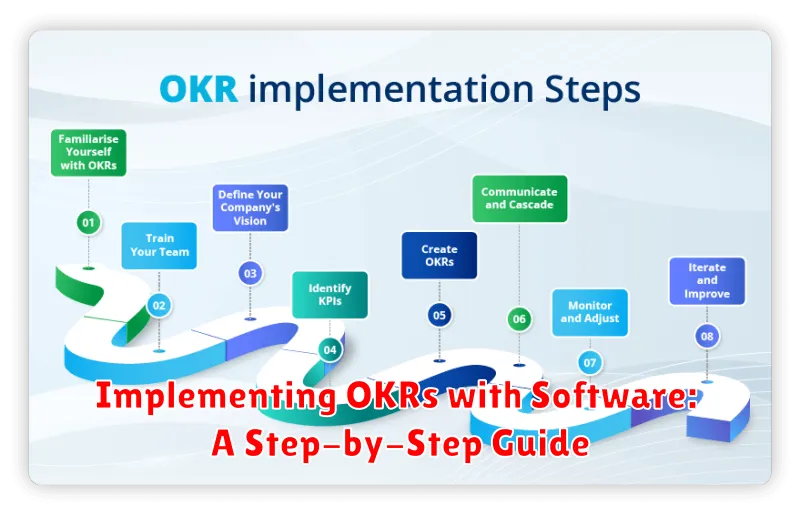
Successfully implementing OKRs with software requires a structured approach. Here’s a step-by-step guide to ensure a smooth transition:
- Define Objectives: Clearly articulate what you want to achieve. Objectives should be ambitious, qualitative, and inspirational.
- Establish Key Results: Set measurable key results that indicate progress toward your objectives. Key results should be specific, measurable, achievable, relevant, and time-bound (SMART).
- Choose the Right Software: Select an OKR software that aligns with your team’s needs and workflow. Consider factors like ease of use, integration capabilities, and reporting features.
- Onboard Your Team: Provide comprehensive training on the software and the OKR methodology. Ensure everyone understands their roles and responsibilities.
- Set Up Your OKRs in the Software: Input your objectives and key results into the software. Assign ownership and set deadlines.
- Regularly Track Progress: Monitor your OKR progress frequently. Use the software’s dashboards and reports to identify areas where you’re on track or falling behind.
- Conduct Check-ins and Reviews: Schedule regular check-ins to discuss progress, identify challenges, and adjust your strategy as needed. Use the software to facilitate these discussions.
- Reflect and Iterate: At the end of each cycle, reflect on your performance and identify lessons learned. Use these insights to improve your OKR process in the next cycle.
By following these steps, you can effectively leverage OKR software to drive alignment, track progress, and achieve your ambitious goals.
OKR Software Best Practices
To maximize the effectiveness of your OKR software, consider implementing these best practices:
- Start with Clear Objectives: Ensure objectives are ambitious yet achievable and clearly defined.
- Limit the Number of OKRs: Focus on a manageable number of Objectives and Key Results per cycle (ideally 3-5 objectives and 3-5 key results per objective).
- Regular Check-ins: Conduct weekly or bi-weekly check-ins to track progress and make necessary adjustments.
- Ensure Alignment: Cascade OKRs from the organizational level down to teams and individuals, ensuring alignment with overall strategic goals.
- Use Data to Inform Decisions: Leverage the reporting features of the software to track performance and identify areas for improvement.
- Foster a Culture of Transparency: Make OKRs visible to all team members, promoting accountability and collaboration.
By adhering to these guidelines, your organization can effectively leverage OKR software to drive meaningful progress and achieve ambitious goals.
Measuring Success with OKR Software

To effectively utilize OKR software, it’s crucial to establish clear metrics for evaluating the success of your OKR implementation. This involves more than just tracking progress; it requires understanding if the software is truly contributing to goal achievement and improved team performance.
Key indicators to monitor include:
- OKR Completion Rate: Percentage of key results achieved.
- Objective Achievement: Overall success in reaching set objectives.
- Team Engagement: Level of team participation and commitment to OKRs, often measured through survey.
- Alignment Score: Degree to which individual and team OKRs are aligned with organizational goals.
- Time Savings: Reduction in time spent on tracking and reporting progress.
Regular review of these metrics will provide valuable insights into the effectiveness of your OKR software and identify areas for improvement.
Common Mistakes to Avoid When Using OKR Software
While OKR software can significantly enhance goal management, several common pitfalls can hinder its effectiveness. Avoiding these mistakes is crucial for maximizing the software’s potential.
Common Mistakes:
- Setting Too Many OKRs: Overwhelming teams with excessive objectives and key results can dilute focus and effort. Prioritize a few impactful goals.
- Lack of Alignment: Failing to align individual and team OKRs with company-wide objectives leads to fragmented efforts and missed opportunities.
- Not Regularly Reviewing Progress: Infrequent check-ins and progress reviews prevent timely course correction and hinder accountability.
- Ignoring Qualitative Data: Focusing solely on quantitative key results can neglect valuable insights from qualitative feedback and observations.
- Treating OKRs as a Task List: Confusing OKRs with daily tasks undermines their strategic purpose and reduces their motivational impact.
- Poor Communication: Not clearly communicating OKRs and their progress across the organization can create confusion and disengagement.
Addressing these issues proactively ensures that your OKR software implementation contributes to meaningful progress and improved team alignment.
