
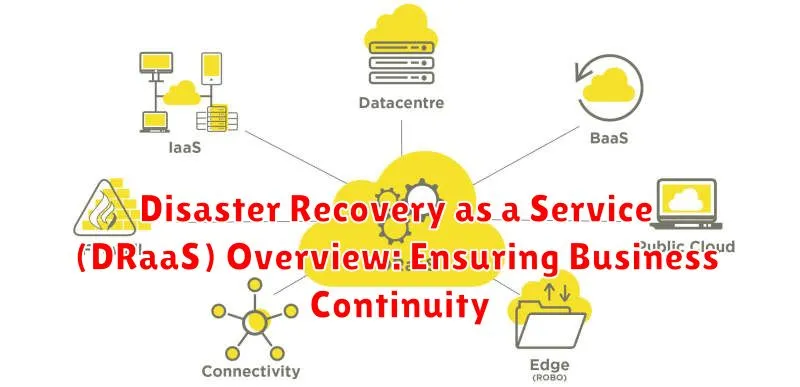
In today’s dynamic business environment, ensuring business continuity in the face of unforeseen events is paramount. Disaster Recovery as a Service (DRaaS) has emerged as a crucial component of a comprehensive IT strategy, offering a robust and cost-effective solution to safeguard critical data and applications. This article provides an overview of DRaaS, exploring its benefits, key features, and implementation considerations, aiming to equip organizations with the knowledge to make informed decisions about their disaster recovery planning.
DRaaS essentially replicates your organization’s IT infrastructure to a secure, off-site location, enabling a rapid failover in the event of a disaster. This service alleviates the burden of maintaining and managing a secondary disaster recovery site, allowing businesses to focus on core operations. Understanding the various DRaaS models, service level agreements (SLAs), and security protocols is essential for selecting the right solution that aligns with your specific business continuity requirements and risk tolerance. This overview will delve into these aspects, providing a foundational understanding of how DRaaS contributes to organizational resilience.
Understanding Disaster Recovery as a Service (DRaaS)
Disaster Recovery as a Service (DRaaS) is a cloud computing service model that allows an organization to back up its data and IT infrastructure to a third-party cloud environment. In the event of a disaster, whether it’s a natural calamity, cyberattack, or human error, the organization can recover its critical systems and data from the cloud, minimizing downtime and ensuring business continuity.
Essentially, DRaaS offers a replicated IT infrastructure in the cloud, ready to take over when the primary infrastructure fails. This proactive approach contrasts with traditional disaster recovery methods that often involve complex setups, significant capital expenditure, and longer recovery times. With DRaaS, the responsibility for managing and maintaining the disaster recovery environment shifts to the service provider.
Key characteristics of DRaaS include:
- Cloud-based replication: Data and applications are mirrored to a secure cloud environment.
- Automated failover: Systems can automatically switch to the secondary environment in case of an outage.
- Scalability: Resources can be easily scaled up or down based on the organization’s needs.
- Reduced capital expenditure: Eliminates the need for significant investment in redundant infrastructure.
The Importance of DRaaS for Business Continuity
Business continuity is paramount for organizations of all sizes. An unexpected disaster, whether natural or man-made, can cripple operations and lead to significant financial losses and reputational damage.
DRaaS plays a crucial role in ensuring that businesses can rapidly recover from such events. By replicating critical systems and data to a secure cloud environment, DRaaS enables organizations to minimize downtime and maintain essential functions during and after a disruption.
Without a robust disaster recovery plan, businesses face:
- Significant financial losses due to downtime.
- Damage to brand reputation and customer trust.
- Legal and regulatory compliance issues.
- Loss of critical data.
DRaaS provides a cost-effective and reliable solution for mitigating these risks and ensuring business resilience.
Key Components of a DRaaS Solution
A robust Disaster Recovery as a Service (DRaaS) solution comprises several critical components working in concert to ensure business continuity. These elements are fundamental for effective data protection and rapid recovery in the event of a disaster.
- Replication: The continuous or near-continuous copying of data from a primary site to a secondary, DR environment.
- Recovery Infrastructure: The IT resources (servers, storage, networking) in the cloud ready to take over operations.
- Orchestration: Automated processes to failover applications and systems to the recovery site and failback when the primary site is restored.
- Monitoring and Alerting: Continuous monitoring of the protected environment and timely alerts in case of disruptions.
- Network Management: Secure and reliable network connectivity between the primary site, the DRaaS environment, and users.
The efficacy of a DRaaS solution hinges on the seamless integration and reliable performance of these components.
Benefits of DRaaS Over Traditional Disaster Recovery
Disaster Recovery as a Service (DRaaS) offers several advantages over traditional disaster recovery methods, primarily concerning cost, complexity, and speed of recovery. Traditional disaster recovery often involves significant upfront investments in hardware, software, and a secondary physical location. DRaaS, on the other hand, operates on a subscription model, reducing capital expenditure and shifting costs to an operational expense.
Furthermore, DRaaS solutions simplify the management of disaster recovery by outsourcing the complexities of infrastructure maintenance and recovery processes to a specialized provider. This reduces the burden on internal IT staff and ensures that the disaster recovery plan is managed by experts.
Finally, DRaaS typically enables faster recovery times. With cloud-based replication and automated failover processes, businesses can restore critical systems and data much quicker than with traditional methods, minimizing downtime and potential data loss.
Types of DRaaS Solutions
Disaster Recovery as a Service (DRaaS) solutions are not one-size-fits-all. They are offered in various models to cater to different business needs and recovery objectives. Understanding these types is crucial when selecting the best option for your organization.
1. Cold DRaaS
Cold DRaaS is the most cost-effective option. It involves replicating data to a secondary site, but the infrastructure remains powered off until needed. Recovery times are longer, making it suitable for less critical applications.
2. Warm DRaaS
Warm DRaaS involves maintaining a scaled-down version of your infrastructure at the recovery site. This allows for faster recovery times compared to Cold DRaaS as some systems are pre-configured and running.
3. Hot DRaaS
Hot DRaaS provides the fastest recovery times. It involves replicating data to a fully operational, mirrored environment. In the event of a disaster, failover is almost instantaneous, minimizing downtime.
4. Managed DRaaS
Managed DRaaS solutions include comprehensive support from the provider, encompassing planning, implementation, testing, and management of the disaster recovery environment. It’s ideal for organizations lacking in-house DR expertise.
5. Self-Service DRaaS
Self-Service DRaaS solutions offer a platform for the client to manage and configure their own Disaster Recovery as a Service (DRaaS) with tools, and documentation, while the client maintain full control of their DR environment.
How DRaaS Works: A Step-by-Step Guide
Disaster Recovery as a Service (DRaaS) operates through a structured process designed to replicate and recover critical systems and data in the event of a disaster. The process typically involves the following steps:
- Assessment and Planning: Identify critical business applications and data to be protected. Develop a comprehensive recovery plan with defined Recovery Time Objectives (RTOs) and Recovery Point Objectives (RPOs).
- Replication: Continuously replicate data and systems to a secure, off-site location managed by the DRaaS provider. This often involves technologies like block-level replication or virtual machine replication.
- Failover: In the event of a disaster, initiate a failover to the secondary environment. This process automatically spins up the replicated systems and data at the DRaaS provider’s location.
- Testing: Regularly test the DRaaS plan to ensure its effectiveness and identify any potential issues. Testing should simulate real-world disaster scenarios.
- Failback: Once the primary systems are restored, perform a failback to the original infrastructure. This involves transferring the updated data and systems back to the primary location.
Effective DRaaS relies on automated processes, robust infrastructure, and continuous monitoring to ensure business continuity.
Factors to Consider When Choosing a DRaaS Provider
Selecting the right Disaster Recovery as a Service (DRaaS) provider is a crucial decision impacting your organization’s ability to maintain business continuity during disruptions. Several factors warrant careful consideration before making a commitment.
Recovery Time Objective (RTO) and Recovery Point Objective (RPO): Understand the provider’s capabilities in meeting your specific RTO and RPO requirements. Ensure these align with your business’s tolerance for downtime and data loss.
Security and Compliance: Thoroughly assess the provider’s security protocols, certifications (e.g., ISO 27001, SOC 2), and compliance with relevant industry regulations (e.g., HIPAA, GDPR). Data encryption and access controls are paramount.
Geographic Redundancy: Evaluate the provider’s data center locations and geographic diversity to mitigate risks associated with regional disasters.
Scalability and Flexibility: The DRaaS solution should be scalable to accommodate your evolving business needs and offer flexibility in terms of supported operating systems, applications, and infrastructure.
Testing and Support: Inquire about the provider’s testing procedures, frequency of testing, and the level of support provided during both testing and actual disaster recovery events.
Implementing DRaaS: Best Practices
Successful implementation of Disaster Recovery as a Service (DRaaS) requires careful planning and adherence to established best practices. Proper implementation ensures a robust and reliable disaster recovery strategy.
Here are key best practices to consider:
- Conduct a Thorough Risk Assessment: Identify potential threats and vulnerabilities that could impact your business operations.
- Define Recovery Time Objectives (RTOs) and Recovery Point Objectives (RPOs): Establish clear targets for recovery time and data loss tolerance.
- Data Backup and Replication: Implement a robust backup and replication strategy to ensure data availability.
- Regular Testing and Drills: Conduct periodic failover tests to validate the DRaaS solution’s effectiveness.
- Documentation: Maintain comprehensive documentation of the DRaaS plan, including procedures and contact information.
- Security Considerations: Ensure the DRaaS provider has strong security measures in place to protect your data.
Adhering to these best practices will significantly improve the effectiveness of your DRaaS solution and enhance your business continuity strategy.
DRaaS Pricing Models: What to Expect
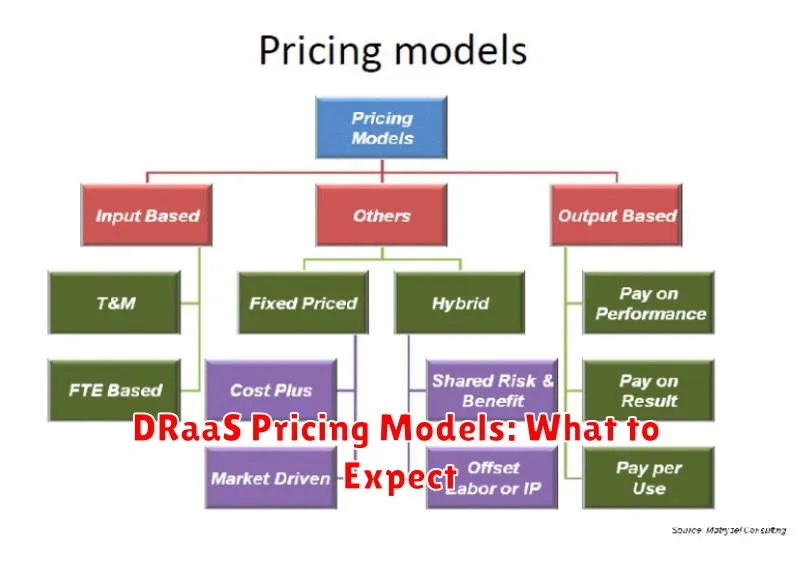
Understanding the pricing models for Disaster Recovery as a Service (DRaaS) is crucial for budgeting and ensuring cost-effectiveness. Several models exist, each with its own advantages and disadvantages.
Common DRaaS Pricing Models
- Pay-as-you-go: You only pay for the resources you consume, such as storage and compute, primarily during failover or testing. This model offers flexibility and can be cost-effective for organizations with infrequent failovers.
- Subscription-based: A fixed monthly or annual fee provides a predetermined level of service and resources. This model offers predictable costs and is suitable for organizations requiring consistent coverage.
- Tiered pricing: Costs are structured based on the amount of resources reserved, such as storage capacity, recovery time objectives (RTOs), and service level agreements (SLAs).
Factors influencing DRaaS pricing include the amount of data protected, the complexity of the IT environment, the level of support required, and the RTO and recovery point objective (RPO) guarantees.
Testing and Maintaining Your DRaaS Plan
Regular testing and maintenance are crucial to ensure the effectiveness of your DRaaS plan. A well-crafted plan is only as good as its ability to perform when needed.
Importance of Regular Testing
Testing validates that your recovery procedures are functional and that your data can be successfully restored. It also identifies potential weaknesses in your plan.
Types of DRaaS Testing
Various testing methods can be employed, including:
- Failover Testing: Simulates a complete system failure.
- Drill Testing: Tests specific recovery processes.
- Tabletop Exercises: Walk-through scenarios to evaluate plan comprehension.
Maintenance and Updates
Your DRaaS plan should be a living document that is updated regularly to reflect changes in your IT infrastructure, business processes, and threat landscape. Maintenance activities include:
- Reviewing and updating documentation.
- Patching and updating software.
- Verifying data replication and backup integrity.
