
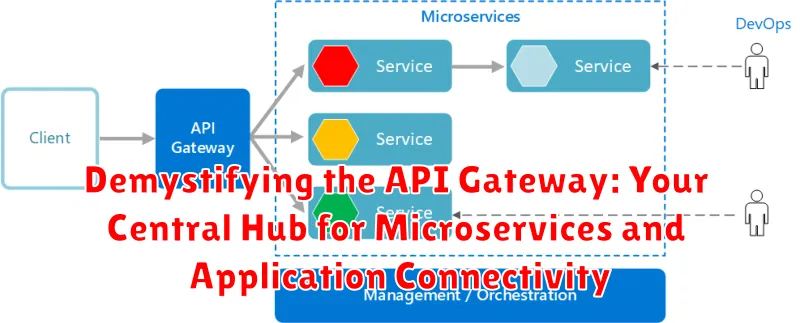
In the complex landscape of modern application architecture, particularly with the rise of microservices, the API gateway emerges as a crucial component. This centralized hub acts as the single point of entry for all client requests, effectively shielding the internal complexities of your systems. Understanding the functionality and benefits of an API gateway is essential for architects, developers, and business leaders alike seeking to optimize performance, enhance security, and streamline the overall user experience across various application platforms.
This article aims to demystify the API gateway concept, providing a comprehensive overview of its core functionalities, common architectures, and the strategic advantages it offers. We will explore how API gateways simplify application connectivity by handling tasks such as authentication, authorization, rate limiting, and request routing. Furthermore, we will delve into the ways in which implementing an API gateway can empower your organization to build more scalable, resilient, and maintainable microservices-based applications, leading to increased agility and faster time-to-market.
Understanding the Core Concept of an API Gateway
An API Gateway acts as a single entry point for all client requests destined for backend services or microservices within an application architecture. Think of it as a reverse proxy, routing, composing, and translating requests.
Instead of clients directly accessing multiple microservices, they communicate with the API Gateway. The gateway then handles routing the request to the appropriate service, potentially transforming the request and response as needed.
Its primary function is to decouple the client applications from the backend service architecture, providing a unified and simplified interface. This abstraction allows for greater flexibility in evolving the backend services without impacting the client applications.
Key Functions and Responsibilities of an API Gateway
An API gateway serves as the central point of entry for all incoming API requests. Its core functions revolve around managing, securing, and optimizing API traffic.
Key Responsibilities:
- Request Routing: Directing incoming requests to the appropriate backend service.
- Authentication & Authorization: Verifying the identity of the client and ensuring they have the necessary permissions.
- Rate Limiting: Protecting backend services from overload by restricting the number of requests from a client within a given timeframe.
- Request Transformation: Modifying the incoming request to match the expected format of the backend service.
- Response Transformation: Transforming the backend service’s response into a format suitable for the client.
- Monitoring & Logging: Tracking API usage and performance for analysis and troubleshooting.
- Caching: Storing frequently accessed data to reduce latency and backend load.
By fulfilling these responsibilities, the API gateway simplifies client interactions, enhances security, and improves the overall performance and scalability of the application architecture.
Benefits of Using an API Gateway in Your Architecture
Implementing an API Gateway offers numerous advantages for modern application architectures, particularly those leveraging microservices.
Simplified Client Communication
An API Gateway acts as a single entry point for clients, abstracting away the complexity of the underlying services. Clients no longer need to interact with multiple microservices directly, simplifying their development and reducing dependencies.
Improved Security
Centralizing authentication, authorization, and rate limiting at the API Gateway enhances security. It allows for consistent enforcement of security policies across all APIs, protecting backend services from unauthorized access and malicious attacks.
Enhanced Performance
API Gateways can optimize performance through features like caching, request aggregation, and protocol translation. By reducing the number of requests to backend services and optimizing data transfer, they improve overall application responsiveness.
Increased Observability
API Gateways provide valuable insights into API usage through logging, monitoring, and analytics. This enhanced observability allows for better understanding of application behavior, identification of performance bottlenecks, and proactive problem solving.
Decoupling and Flexibility
By decoupling clients from backend services, API Gateways enable greater flexibility and agility. Microservices can be updated, scaled, or replaced without impacting client applications, fostering continuous integration and delivery.
Different Types of API Gateway Architectures
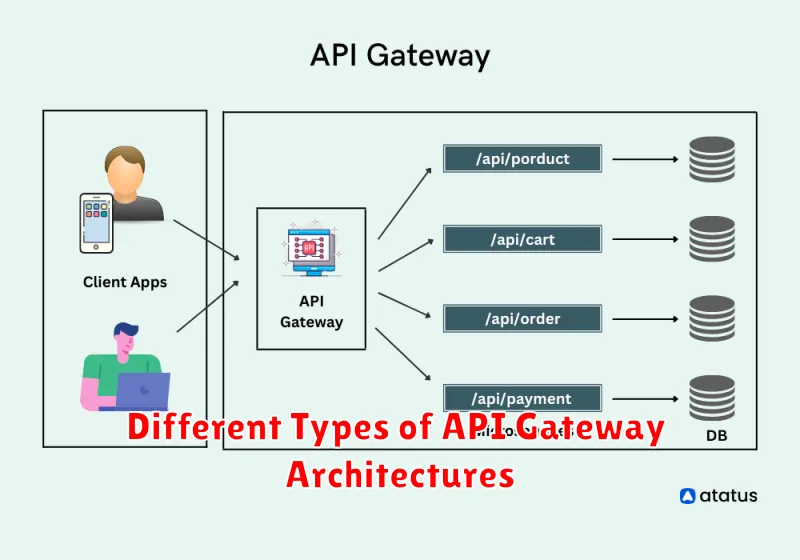
API gateways are not monolithic entities; they can be implemented using various architectural patterns, each offering distinct advantages depending on the specific needs of the application and infrastructure. Understanding these different types is crucial for selecting the most suitable architecture.
Centralized API Gateway
This is a common pattern where a single API gateway handles all incoming requests and routes them to the appropriate backend services. It provides a single point of entry and simplifies management.
Decentralized (or Distributed) API Gateway
In a decentralized approach, multiple API gateways are deployed, each responsible for a subset of backend services or a specific domain. This can improve scalability and resilience by distributing the load and reducing the impact of a single point of failure. Typically used in more complex microservices architectures.
Edge API Gateway
Deployed at the edge of the network, an edge API gateway focuses on handling external requests and providing security and authentication services before routing traffic to internal API gateways or backend services. Focuses on external traffic management.
Backend for Frontends (BFF)
This pattern involves creating separate API gateways tailored to the specific needs of different client applications (e.g., web, mobile). Each BFF gateway transforms the backend data into a format that is optimal for the corresponding frontend. Optimized for specific user interfaces.
How API Gateways Enhance Security and Control
API Gateways play a vital role in bolstering security and maintaining control over access to backend services. They serve as a single point of entry, allowing for centralized enforcement of security policies.
Key Security Features
- Authentication and Authorization: API Gateways can authenticate users and authorize their access based on predefined roles and permissions.
- Threat Protection: They can mitigate common threats such as SQL injection, cross-site scripting (XSS), and Distributed Denial-of-Service (DDoS) attacks.
- Rate Limiting: API Gateways control the number of requests, preventing abuse and ensuring fair usage of resources.
- Encryption: They support encryption protocols like TLS/SSL to protect data in transit.
Centralized Control
By centralizing security measures, API Gateways provide a clear and auditable control plane for managing API access. This simplifies security management and ensures consistent enforcement of policies across all microservices.
API Gateway vs. Load Balancer: Key Differences
While both API Gateways and Load Balancers manage traffic, they serve distinct purposes. A Load Balancer distributes network traffic across multiple servers to ensure high availability and optimal resource utilization. It operates at Layer 4 (Transport Layer) or Layer 7 (Application Layer) and primarily focuses on distributing workloads.
In contrast, an API Gateway acts as a central point of entry for all API requests. It provides additional functionalities such as authentication, authorization, rate limiting, and request transformation. Unlike Load Balancers, API Gateways understand the semantics of the API calls and can perform intelligent routing based on request content.
Here’s a table summarizing the key differences:
| Feature | API Gateway | Load Balancer |
|---|---|---|
| Focus | API Management and Routing | Traffic Distribution |
| Layer | Layer 7 (Application) | Layer 4 (Transport) / Layer 7 (Application) |
| Functionality | Authentication, Authorization, Rate Limiting, Transformation | Load Balancing, Health Checks |
| Awareness | API-aware | Server-aware |
Implementing an API Gateway: Key Considerations
Implementing an API Gateway requires careful planning and consideration of several key factors to ensure success and alignment with your organization’s goals. Here are some crucial aspects to keep in mind:
- Choosing the Right Technology: Select an API Gateway solution that aligns with your technical requirements, budget, and scalability needs. Consider open-source versus commercial options.
- Defining Clear Routing Rules: Establish well-defined routing rules to effectively direct traffic to the appropriate backend services. This is critical for maintaining performance and reliability.
- Security Implementation: Integrate robust security measures, including authentication, authorization, and rate limiting, to protect your APIs from unauthorized access and malicious attacks.
- Monitoring and Logging: Implement comprehensive monitoring and logging capabilities to track API performance, identify potential issues, and facilitate debugging.
- Scalability and Performance: Design your API Gateway architecture to handle increasing traffic loads and maintain optimal performance. Consider caching strategies and load balancing.
Common Use Cases for API Gateways
API Gateways are versatile tools that address various challenges in modern application architectures. Their widespread adoption stems from their ability to streamline and enhance several critical functions.
One primary use case is microservices aggregation. Instead of exposing numerous microservices directly to clients, an API Gateway acts as a single entry point, aggregating requests and responses, thereby simplifying the client-side development.
Another common application involves legacy system modernization. API Gateways can provide a consistent and modern interface to older, monolithic applications, allowing developers to incrementally migrate functionalities without disrupting existing users.
Furthermore, API Gateways are frequently used for mobile backend as a service (MBaaS) implementations. They tailor APIs specifically for mobile devices, optimizing data transfer and reducing battery consumption.
External API Management is another significant area. API Gateways control access to internal APIs by external partners and developers, enabling monetization strategies and fostering ecosystems.
The Future of API Gateways in Modern Application Development
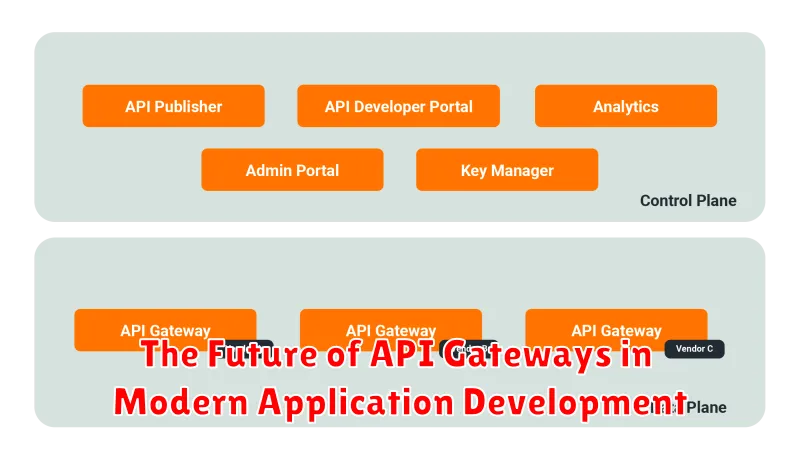
The role of API gateways is poised for significant evolution alongside advancements in application development paradigms. Expect to see tighter integrations with serverless computing and function-as-a-service (FaaS) platforms, allowing for more dynamic and scalable API management.
AI-powered API gateways are also on the horizon, offering intelligent routing, threat detection, and automated policy enforcement. These intelligent gateways will leverage machine learning to optimize API performance and security posture. This includes anomaly detection and proactive threat mitigation.
Furthermore, expect increased focus on API observability, with richer monitoring and analytics capabilities embedded within the gateway. This will enable developers to gain deeper insights into API usage patterns, identify performance bottlenecks, and optimize API design for improved user experiences.
Best Practices for API Gateway Management
Effective management of an API gateway is crucial for ensuring optimal performance, security, and reliability. These best practices help streamline operations and maximize the benefits of your API gateway.
Centralized Configuration Management
Centralize all API gateway configurations to ensure consistency and simplify updates. Employ a version control system to track changes and facilitate rollbacks if necessary.
Robust Monitoring and Logging
Implement comprehensive monitoring and logging to gain insights into API traffic, performance bottlenecks, and potential security threats. Utilize dashboards and alerting systems for proactive issue detection.
Automated Deployment and Scaling
Automate the deployment and scaling of your API gateway to ensure high availability and responsiveness to changing traffic patterns. Utilize Infrastructure as Code (IaC) tools for consistent and repeatable deployments.
Security Hardening
Regularly review and update security policies to protect against evolving threats. Implement strong authentication, authorization, and rate limiting mechanisms. Consider using a Web Application Firewall (WAF) for additional protection.
Regular Audits and Updates
Conduct regular audits of API gateway configurations and policies to identify and address potential vulnerabilities or inefficiencies. Keep the API gateway software up to date with the latest security patches and feature enhancements.
