
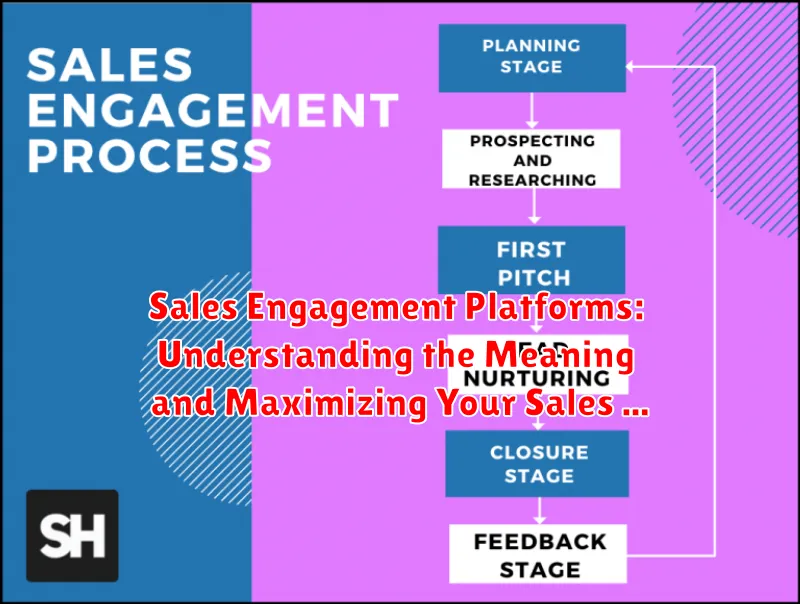
In today’s rapidly evolving sales landscape, achieving consistent revenue growth requires more than just a dedicated sales team. Businesses are increasingly turning to sophisticated technological solutions to streamline processes, enhance customer interactions, and ultimately boost sales performance. One such solution gaining significant traction is the Sales Engagement Platform (SEP). This article delves into the core of what a Sales Engagement Platform truly means, exploring its functionalities, and clarifying its role in modern sales operations. Understanding the nuances of a SEP is crucial for any organization seeking to optimize its sales strategy and achieve sustainable success.
This comprehensive guide aims to demystify the complexities surrounding Sales Engagement Platforms. We will dissect the various features commonly found within these platforms, such as automated email sequences, activity tracking, and integration capabilities with existing CRM systems. Moreover, we will explore actionable strategies for maximizing your sales strategy by effectively leveraging the power of a Sales Engagement Platform. By understanding how to utilize these tools effectively, sales teams can improve efficiency, personalize customer interactions, and drive substantial revenue growth on a global scale, while also gaining a competitive advantage in the marketplace.
What is a Sales Engagement Platform?
A Sales Engagement Platform (SEP) is a technology solution designed to streamline and optimize interactions between sales representatives and potential customers. It serves as a centralized hub for managing and automating various sales activities, including email outreach, phone calls, social media engagement, and task management. The goal of an SEP is to enhance communication effectiveness, improve sales productivity, and ultimately, drive revenue growth.
Unlike a CRM (Customer Relationship Management) system, which primarily focuses on managing customer data and tracking sales progress, an SEP emphasizes the execution of sales strategies and the orchestration of multi-channel interactions. It empowers sales teams to personalize communication at scale, track engagement metrics, and adapt their approach based on real-time data.
Key aspects of a Sales Engagement Platform include:
- Automation: Automating repetitive tasks such as email follow-ups and lead assignment.
- Personalization: Tailoring messaging to individual prospects based on their behavior and profile.
- Tracking and Analytics: Monitoring engagement metrics to identify successful strategies and areas for improvement.
- Multi-Channel Communication: Enabling sales reps to interact with prospects across various channels.
Key Features and Functionality of Sales Engagement Platforms
Sales Engagement Platforms (SEPs) offer a range of features designed to streamline and enhance sales interactions. A core functionality is multi-channel communication, allowing sales teams to engage prospects via email, phone, social media, and more, all from a centralized platform.
Automation is another critical feature, enabling automated email sequences, task reminders, and follow-ups. This helps sales representatives stay organized and consistent in their outreach efforts.
Analytics and reporting provide valuable insights into engagement metrics, such as open rates, click-through rates, and response times. This data empowers sales teams to optimize their strategies and identify areas for improvement.
Integration capabilities are also essential. SEPs typically integrate with CRM systems and other sales tools to ensure seamless data flow and a unified view of customer interactions.
Benefits of Using a Sales Engagement Platform for Sales Teams
Implementing a Sales Engagement Platform (SEP) offers significant advantages for sales teams, leading to increased efficiency and improved results. One of the primary benefits is enhanced communication consistency. SEPs allow sales representatives to maintain a unified brand voice across all channels, ensuring clarity and professionalism in every interaction.
Another key advantage is increased efficiency. By automating repetitive tasks, such as email follow-ups and lead nurturing, SEPs free up valuable time for sales representatives to focus on closing deals and building relationships. This leads to a more productive sales force and improved overall performance.
Furthermore, SEPs provide better data insights into customer interactions. Through detailed analytics, sales teams can gain a deeper understanding of what strategies are working and where improvements can be made. This data-driven approach allows for more informed decision-making and optimized sales processes.
Here’s a brief list of the core benefits:
- Improved Sales Productivity
- Enhanced Lead Engagement
- Streamlined Communication
- Increased Closing Rates
How Sales Engagement Platforms Improve Sales Productivity
Sales engagement platforms significantly boost sales productivity by streamlining and automating key sales processes. They enable sales teams to reach more prospects and close deals faster.
Here’s how:
- Automation: Automates repetitive tasks like sending follow-up emails, scheduling meetings, and logging activities.
- Centralized Communication: Provides a single platform for all communication channels, ensuring consistent messaging.
- Personalized Outreach: Facilitates personalized engagement with prospects based on their behaviors and interests.
- Data-Driven Insights: Offers real-time analytics and reporting to track performance and identify areas for improvement.
By reducing manual work and providing actionable insights, sales engagement platforms empower sales representatives to focus on building relationships and closing deals effectively, ultimately leading to increased productivity and revenue.
Integrating a Sales Engagement Platform with Your CRM
Integrating a Sales Engagement Platform (SEP) with your Customer Relationship Management (CRM) system is crucial for maximizing efficiency and gaining a holistic view of your customer interactions. This integration facilitates seamless data flow between the two systems.
Here are key benefits of integrating your SEP with your CRM:
- Centralized Data: Consolidate all customer interaction data (emails, calls, social media activity) within the CRM, providing a single source of truth.
- Improved Lead Prioritization: Utilize SEP data on engagement levels to prioritize leads within the CRM, focusing on the most promising prospects.
- Enhanced Reporting and Analytics: Generate comprehensive reports that combine sales engagement data with CRM data, offering deeper insights into sales performance and customer behavior.
- Automated Workflows: Automate tasks such as lead assignment, follow-up reminders, and data synchronization, freeing up sales reps to focus on selling.
Proper integration requires mapping data fields between the SEP and CRM and configuring workflows to ensure data consistency and accuracy. This integration empowers sales teams with a 360-degree view of the customer, leading to more personalized and effective engagement strategies.
Best Practices for Implementing a Sales Engagement Platform
Successfully implementing a Sales Engagement Platform (SEP) requires careful planning and execution. These practices ensure your team maximizes its potential.
Define Clear Objectives: Start by outlining specific, measurable, achievable, relevant, and time-bound (SMART) goals. What do you want to achieve with the SEP?
Comprehensive Training: Provide thorough training for all sales team members on how to effectively use the platform’s features. Ongoing training should be scheduled, especially for new features being adopted.
Data Integration Strategy: Ensure smooth data flow between the SEP and your CRM. This minimizes manual data entry and ensures data accuracy.
Content Alignment: Develop engaging and relevant content tailored to different stages of the buyer’s journey.
Regular Monitoring and Optimization: Continuously track key performance indicators (KPIs) and adjust your strategy based on the data. A/B test different approaches to optimize engagement rates.
Measuring the ROI of Your Sales Engagement Platform
Determining the return on investment (ROI) of your sales engagement platform is crucial for justifying its cost and optimizing its use. This process involves tracking key metrics and analyzing their impact on your sales performance.
Key Metrics to Track:
- Lead Conversion Rate: Monitor the percentage of leads that convert into opportunities and customers.
- Sales Cycle Length: Track the time it takes to close a deal. A shorter cycle indicates improved efficiency.
- Sales Productivity: Measure the number of activities (calls, emails, meetings) completed by sales reps.
- Revenue Growth: Analyze the overall increase in revenue attributed to the platform.
To calculate ROI, compare the gains (increased revenue, reduced costs) with the investment in the platform (subscription fees, implementation costs, training expenses). A positive ROI indicates that the platform is contributing to your bottom line.
Common Use Cases for Sales Engagement Platforms
Sales engagement platforms (SEPs) are versatile tools applicable across various sales scenarios. One common use case is lead nurturing, where SEPs automate personalized email sequences and follow-ups, guiding prospects through the sales funnel.
Another significant application lies in outbound sales. Sales teams leverage SEPs to streamline prospecting, automate outreach via multiple channels (email, social media, phone), and track engagement metrics for optimized strategies.
SEPs are also valuable for account-based marketing (ABM). By identifying key decision-makers within target accounts, SEPs facilitate coordinated and personalized communication to entire buying groups, increasing the likelihood of closing deals.
Furthermore, sales development representatives (SDRs) use SEPs to efficiently qualify leads, book meetings, and manage their daily tasks, leading to increased productivity and a more structured sales process.
Finally, SEPs are used for renewal and upsell campaigns to engage existing customers, communicate value, and convert customers into loyal advocates.
Choosing the Right Sales Engagement Platform for Your Business
Selecting the appropriate sales engagement platform is crucial for optimizing your sales strategy. The ideal platform should align with your specific business needs, sales process, and CRM integration capabilities. Begin by defining your key objectives and identifying areas where a sales engagement platform can provide the most significant impact.
Consider the following factors during your evaluation:
- Integration: Ensure seamless integration with your existing CRM and other sales tools.
- Scalability: The platform should be able to scale with your business as it grows.
- Features: Evaluate the platform’s features, such as email automation, call tracking, and analytics, to ensure they meet your requirements.
- User-Friendliness: Opt for a platform that is intuitive and easy to use for your sales team.
- Pricing: Compare pricing models and choose a platform that offers the best value for your investment.
Thoroughly assess each potential platform through demos and trials to determine which one best fits your organization’s unique circumstances.
Future Trends in Sales Engagement Technology

The landscape of sales engagement technology is rapidly evolving, driven by advancements in artificial intelligence (AI), machine learning (ML), and data analytics. Expect to see further integration of these technologies into sales engagement platforms, leading to more personalized and automated outreach strategies.
Here are some key trends to watch:
- AI-Powered Personalization: Predictive analytics will enable hyper-personalized content and messaging based on individual customer behavior and preferences.
- Enhanced Automation: Streamlined workflows and automated task management will further reduce manual effort for sales reps, allowing them to focus on building relationships.
- Omnichannel Engagement: Seamless integration across various communication channels (email, phone, social media, chat) will provide a unified customer experience.
- Improved Analytics and Reporting: Advanced data visualization tools will offer deeper insights into engagement performance, enabling data-driven decision-making.
- Integration with Emerging Technologies: Expect to see platforms integrate with technologies such as virtual reality (VR) and augmented reality (AR) to create immersive sales experiences.
