
The landscape of content management systems (CMS) has undergone a significant transformation, with headless CMS solutions emerging as a powerful alternative to traditional monolithic systems. This article delves into the exciting world of headless CMS, providing a comprehensive definition, exploring the multifaceted benefits, and illustrating real-world use cases. We aim to equip readers with a foundational understanding of this innovative approach to content management, empowering them to make informed decisions about their digital strategies. The concept of separating content from its presentation layer opens up a new era of possibilities for delivering personalized and engaging experiences across a multitude of channels and devices.
As businesses increasingly embrace omnichannel strategies to reach their target audiences, the limitations of traditional CMS platforms become apparent. Headless CMS offers a compelling solution by providing a flexible and agile architecture that allows content creators to focus on crafting compelling narratives without being constrained by pre-defined templates or rigid design constraints. By decoupling the content repository from the presentation layer, organizations gain the freedom to deliver content seamlessly across websites, mobile apps, IoT devices, and emerging platforms. Discover how headless CMS is reshaping the way businesses manage and distribute content in today’s dynamic digital environment and explore its practical use cases.
What is a Headless CMS?
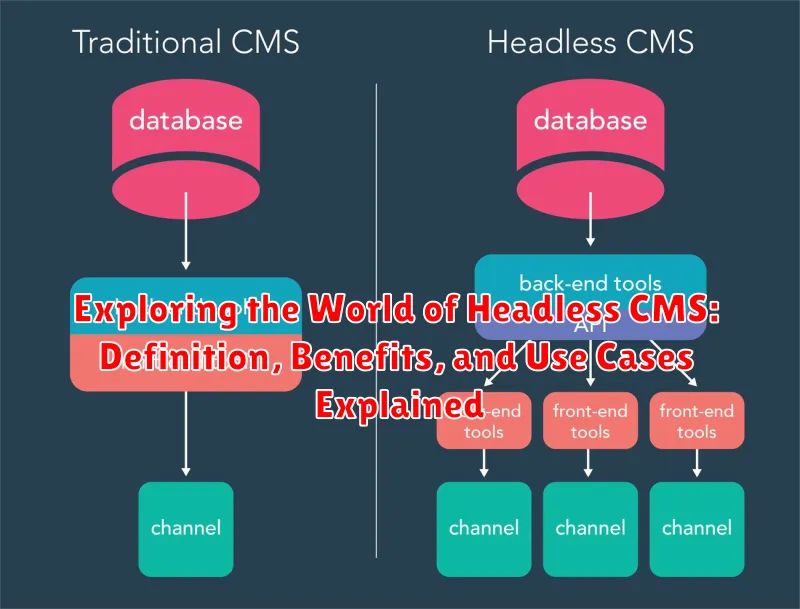
A Headless Content Management System (CMS) is a type of CMS that decouples the content repository (“body”) from the presentation layer or frontend (“head”). This means the CMS manages and stores content, but doesn’t dictate how or where that content is displayed.
Unlike traditional CMS platforms, a headless CMS delivers content via APIs (Application Programming Interfaces). This allows content to be distributed across various channels and devices, such as websites, mobile apps, IoT devices, digital signage, and more.
Essentially, the “head” (the presentation layer) is removed, leaving only the “body” (the content repository and API layer). This separation provides developers with greater flexibility and control over how content is presented, enabling them to build customized and engaging user experiences across diverse platforms.
Traditional CMS vs. Headless CMS: Key Differences
The fundamental difference between a traditional CMS and a headless CMS lies in their architecture. A traditional CMS, such as WordPress or Drupal, is a monolithic system that tightly couples the content repository (the “body”) with the presentation layer (the “head”). This means the CMS dictates how and where content is displayed.
In contrast, a headless CMS decouples these two layers. The content repository remains, but the presentation layer is removed (hence, “headless”). Content is delivered via APIs, allowing it to be displayed on any device or platform, such as websites, mobile apps, IoT devices, or digital signage.
Here’s a quick comparison:
- Traditional CMS: Coupled architecture, easier initial setup, limited flexibility in content delivery.
- Headless CMS: Decoupled architecture, more complex initial setup, greater flexibility in content delivery channels.
The choice between the two depends on the specific needs and goals of the project. If you need a simple website and value ease of use, a traditional CMS might suffice. If you need to deliver content across multiple channels and require greater flexibility, a headless CMS is the better option.
The Architecture of a Headless CMS: Decoupled Approach
The core of a headless CMS lies in its decoupled architecture. Unlike traditional CMS platforms where the content management system is tightly coupled with the presentation layer (the frontend), a headless CMS separates these two crucial components. This decoupling offers immense flexibility and scalability.
In a headless setup, the backend (where content is stored and managed) operates independently from the frontend (where content is displayed to the user). The content is delivered via APIs (Application Programming Interfaces), typically using RESTful or GraphQL endpoints.
This API-driven approach allows developers to retrieve content from the CMS and display it on any device or platform, including websites, mobile apps, IoT devices, and more. The frontend developers have the freedom to choose their preferred technology stack without being constrained by the CMS.
The architecture generally consists of:
- Content Repository: The database where all content is stored.
- API Layer: Provides endpoints for content delivery.
- Admin Interface: A user-friendly interface for content creators.
Benefits of Using a Headless CMS for Content Management
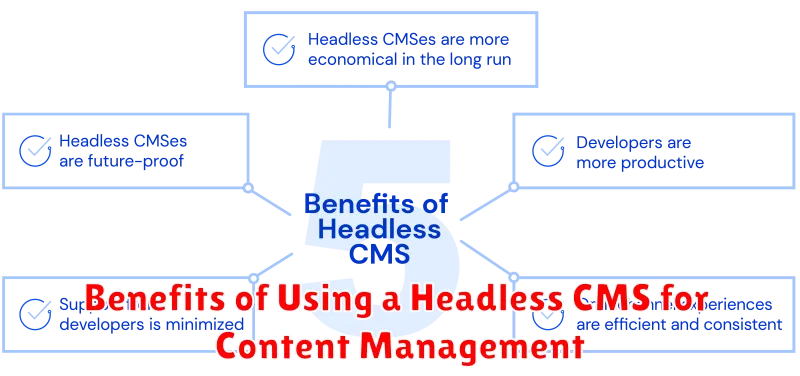
Utilizing a headless CMS provides numerous advantages for content management, primarily revolving around flexibility and scalability.
Enhanced Flexibility and Omnichannel Delivery
A headless CMS enables content to be delivered across a multitude of channels and devices. This omnichannel approach is crucial in today’s diverse digital landscape. Content creators are not restricted to a single presentation layer, allowing them to repurpose content for websites, mobile apps, IoT devices, and more.
Improved Performance and Security
By decoupling the content repository from the presentation layer, headless CMSs often result in improved website performance. Furthermore, without a direct connection between the content repository and the front-end, the system is generally more secure, reducing the attack surface.
Developer Empowerment and Faster Development Cycles
Headless CMS empowers developers to use their preferred front-end technologies and frameworks. This promotes developer autonomy and enables faster development cycles, as developers can focus on building engaging user experiences without CMS constraints.
Common Use Cases for Headless CMS: When to Choose It?
A Headless CMS excels in scenarios demanding content delivery across diverse platforms beyond traditional websites. It’s particularly advantageous when:
- Omnichannel experiences are paramount. Reach users on mobile apps, IoT devices, and emerging platforms with a single content repository.
- Personalization is a key requirement. Deliver tailored content based on user data and behavior across different channels.
- Complex and dynamic content structures are necessary. Manage content-rich applications with ease and flexibility.
- Frontend flexibility is desired. Empower developers to use their preferred technologies and frameworks for building user interfaces.
- Scalability and performance are critical. Decoupled architecture allows independent scaling of the backend and frontend.
Consider a Headless CMS when you need to future-proof your content strategy and avoid the limitations of a traditional, coupled system. It provides the agility and flexibility to adapt to evolving technological landscapes and user expectations. Specific examples include e-commerce platforms, digital signage, and progressive web apps (PWAs).
Key Features to Look for in a Headless CMS
When selecting a headless CMS, several key features should be considered to ensure it aligns with your specific needs and technical infrastructure. These features contribute to the flexibility, scalability, and efficiency of your content management strategy.
API-First Architecture: This is foundational. A robust and well-documented API is crucial for seamless content delivery to various channels.
Content Modeling Flexibility: The ability to define custom content types and relationships is essential for structuring content in a way that suits your unique requirements.
Scalability and Performance: Choose a headless CMS that can handle growing content volumes and traffic without compromising performance. Consider its infrastructure and content delivery network (CDN) capabilities.
Security: Ensure the CMS offers robust security features, including user authentication, authorization, and protection against common web vulnerabilities.
Workflow and Collaboration Tools: Look for features that support content creation, review, and publishing workflows. Collaboration tools facilitate teamwork and ensure content quality.
Developer-Friendly Environment: Comprehensive documentation, SDKs, and community support are vital for developers to integrate and customize the CMS effectively.
Content Preview: The ability to preview content before publishing is crucial for ensuring accuracy and visual appeal across different channels.
How to Implement a Headless CMS: A Step-by-Step Guide
Implementing a headless CMS requires a structured approach to ensure a smooth transition and optimal results. This guide provides a step-by-step process.
1. Define Your Content Requirements:
Clearly outline the types of content you’ll be managing (e.g., articles, product descriptions, images) and the channels where it will be published. This will inform your CMS selection and content modeling.
2. Choose the Right Headless CMS:
Evaluate different headless CMS platforms based on your needs, considering factors like ease of use, scalability, API capabilities, and pricing. Consider both open-source and commercial options.
3. Model Your Content:
Design a content model that defines the structure and relationships between your content types. This involves defining fields, data types, and validation rules for each content item.
4. Set Up the CMS and APIs:
Configure your chosen headless CMS and ensure its APIs are accessible to your front-end applications. This often involves setting up authentication and authorization.
5. Develop Your Front-End Applications:
Build or adapt your front-end applications to consume content from the CMS via its APIs. Use appropriate frameworks and libraries to handle data fetching and rendering.
6. Test and Deploy:
Thoroughly test your entire system to ensure content is being served correctly and that all functionalities are working as expected. Deploy your applications to your production environment.
Headless CMS and SEO: Best Practices for Optimization
While a headless CMS offers flexibility in content delivery, optimizing for SEO requires careful consideration. The decoupling of the content repository from the presentation layer necessitates specific strategies to ensure search engine crawlers can effectively access and index your content.
Key Considerations for Headless CMS SEO:
- Structured Data Markup: Implement schema.org vocabulary to provide search engines with contextual information about your content.
- Sitemap Generation: Generate and submit an XML sitemap to search engines, ensuring all content is discoverable.
- URL Structure: Maintain clean and descriptive URLs that are easy for both users and search engines to understand.
- Page Speed Optimization: Optimize image sizes, leverage browser caching, and minimize HTTP requests to improve page loading speed, a crucial ranking factor.
- Mobile-Friendliness: Ensure your front-end is responsive and provides an optimal viewing experience on all devices.
- Content Delivery Network (CDN): Utilize a CDN to distribute content geographically, reducing latency and improving loading times for users worldwide.
By implementing these best practices, you can mitigate potential SEO challenges associated with a headless CMS architecture and maintain strong search engine visibility.
Popular Headless CMS Platforms: A Comparison
Selecting the right headless CMS platform is crucial for success. Several prominent options cater to diverse needs. This section offers a concise comparison of some leading platforms.
Contentful
Contentful is a widely recognized headless CMS known for its robust API, scalability, and developer-friendly features. It’s a strong choice for enterprise-level projects requiring complex content models and multi-channel delivery.
Strapi
Strapi is an open-source headless CMS that offers a flexible and customizable solution. Its node.js-based architecture makes it appealing to developers familiar with JavaScript. Strapi provides a user-friendly interface and strong community support.
Sanity
Sanity emphasizes structured content and real-time collaboration. Its unique approach to content modeling and powerful GROQ query language make it ideal for projects that require highly structured data and personalized content experiences.
Directus
Directus is an open-source headless CMS that instantly turns your SQL database into a REST & GraphQL API and a no-code admin app, empowering developers to create sophisticated data-driven applications without the complexity of traditional CMSs.
ButterCMS
ButterCMS focuses on ease of use and quick integration. This platform is suitable for marketing teams and developers who need a straightforward solution for managing content across multiple websites and applications.
Future Trends in Headless CMS Technology
The landscape of headless CMS technology is rapidly evolving, driven by the increasing demand for personalized and omnichannel content delivery. Several key trends are shaping its future direction.
AI-powered Content Management: Expect to see greater integration of artificial intelligence and machine learning for automated content tagging, personalized content recommendations, and improved content insights.
Enhanced Personalization Capabilities: Headless CMS platforms will offer more sophisticated tools for tailoring content to individual user preferences and behaviors, leveraging data analytics for optimized experiences.
Composable Architectures: A shift towards more modular and composable architectures will allow businesses to assemble best-of-breed tools and services, further enhancing flexibility and customization.
Serverless Functions and Edge Computing: Increased adoption of serverless functions and edge computing will enable faster content delivery and improved performance, particularly for geographically dispersed audiences.
Greater Focus on Developer Experience: Headless CMS vendors are investing in improving the developer experience with enhanced APIs, better documentation, and more intuitive interfaces to simplify integration and customization.
