
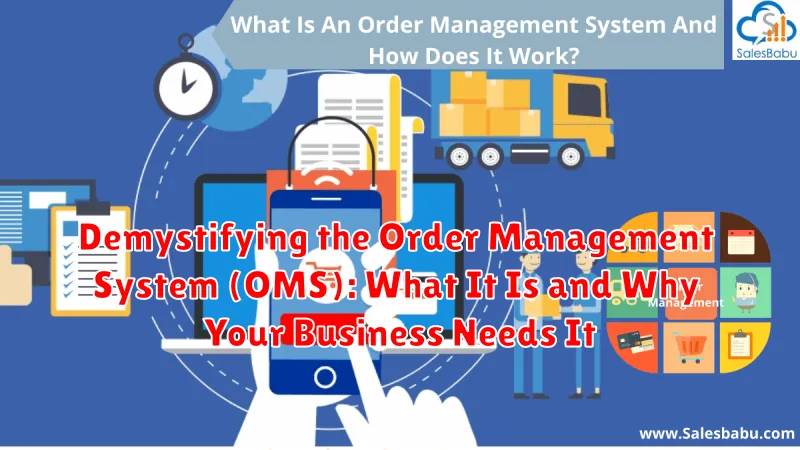
In today’s dynamic and competitive business landscape, efficient operations are crucial for sustained success. One of the key components underpinning a streamlined and profitable enterprise is a robust Order Management System (OMS). Many businesses, both large and small, struggle with fragmented processes, leading to inefficiencies and lost revenue. But what exactly *is* an OMS, and why is it becoming increasingly essential for businesses across diverse industries and geographies? This article aims to demystify the Order Management System, providing a comprehensive overview of its core functionalities and outlining the significant benefits it offers to organizations seeking to optimize their order fulfillment processes and enhance overall operational efficiency.
This article will explore the intricacies of an OMS, explaining how it centralizes and automates the order lifecycle, from initial placement to final delivery. We will delve into the key features and capabilities of a modern Order Management System, including inventory management, order routing, shipping optimization, and customer communication. Moreover, we will highlight the compelling reasons why implementing an OMS is no longer a luxury, but a strategic necessity for businesses striving to maintain a competitive edge in the global marketplace. Discover how an OMS can empower your organization to reduce costs, improve customer satisfaction, and ultimately, drive significant revenue growth.
What is an Order Management System (OMS)? A Clear Definition
An Order Management System (OMS) is a comprehensive software solution designed to automate and streamline the entire order lifecycle, from the moment a customer places an order to its final delivery and settlement. It serves as a central hub for managing all order-related activities, providing a unified view of order information across various departments and channels.
At its core, an OMS helps businesses efficiently process orders, track inventory, manage fulfillment, and provide excellent customer service. It eliminates manual processes, reduces errors, and improves overall operational efficiency.
Key functions of an OMS include:
- Order entry and processing
- Inventory management
- Order fulfillment and shipping
- Payment processing
- Customer communication
- Reporting and analytics
By centralizing these functions, an OMS ensures a seamless and accurate order fulfillment process, leading to increased customer satisfaction and improved profitability.
Key Components of an Order Management System: Understanding the Modules
An Order Management System (OMS) isn’t a single piece of software but rather a collection of integrated modules that work together to manage the order lifecycle. Understanding these key components is crucial for effective OMS implementation.
Common modules within an OMS include:
- Order Entry: Captures customer orders from various channels.
- Inventory Management: Tracks stock levels in real-time and manages inventory across locations.
- Order Processing: Automates order validation, routing, and fulfillment.
- Shipping Management: Streamlines shipping processes, label generation, and carrier integration.
- Payment Processing: Securely handles payment transactions.
- Reporting and Analytics: Provides insights into order performance and key metrics.
The specific modules included in an OMS can vary depending on the vendor and the specific needs of the business. Choosing an OMS with the right combination of modules is essential for optimizing order management processes.
Benefits of Implementing an OMS: Streamlining Your Order Process
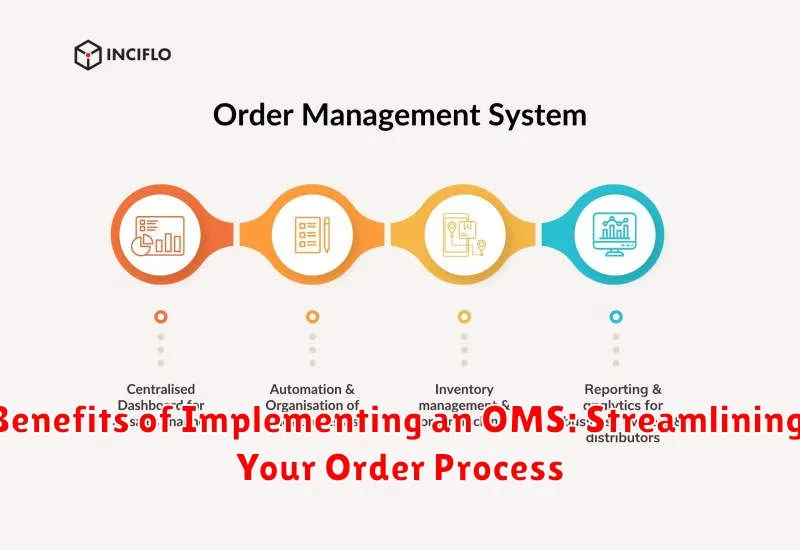
Implementing an Order Management System (OMS) offers significant advantages in streamlining your order processes, leading to increased efficiency and reduced operational costs. An effective OMS automates various stages of the order lifecycle, minimizing manual intervention and potential errors.
Here are some key benefits:
- Improved Order Accuracy: Automated data entry and validation reduce the risk of errors in order processing.
- Faster Order Fulfillment: Streamlined workflows and real-time inventory visibility enable faster order processing and shipping.
- Reduced Operational Costs: Automation reduces the need for manual labor, lowering labor costs and minimizing errors that can lead to costly returns or reshipments.
- Enhanced Inventory Management: An OMS provides real-time visibility into inventory levels across all locations, preventing stockouts and overstocking.
- Increased Customer Satisfaction: Faster order fulfillment, accurate orders, and timely communication contribute to improved customer satisfaction.
By centralizing and automating order management, businesses can optimize their operations and improve their bottom line.
How OMS Integrates with Other Business Systems: ERP, CRM, and More
An Order Management System (OMS) does not operate in isolation. Its true power lies in its ability to seamlessly integrate with other critical business systems, creating a cohesive and efficient workflow. This integration ensures data consistency, reduces redundancies, and streamlines operations across various departments.
Integration with Enterprise Resource Planning (ERP) Systems
Integration with ERP systems provides a comprehensive view of business resources. The OMS shares order data with the ERP system, allowing for accurate inventory management, financial accounting, and production planning. This ensures that orders are fulfilled efficiently and resources are allocated effectively.
Integration with Customer Relationship Management (CRM) Systems
Integrating with CRM systems provides a unified view of the customer. The OMS shares order information with the CRM, giving customer service representatives access to order history, allowing them to provide better support and personalized service. This integration enhances customer satisfaction and loyalty.
Other Integrations
Beyond ERP and CRM, OMS can integrate with systems such as:
- Warehouse Management Systems (WMS): Streamlining warehouse operations and fulfillment processes.
- Shipping Solutions: Automating shipping label generation and tracking information.
- Accounting Software: Simplifying financial reconciliation and reporting.
Types of Order Management Systems: On-Premise vs. Cloud-Based
Order Management Systems (OMS) can be broadly categorized into two primary deployment models: on-premise and cloud-based. Understanding the distinctions between these models is crucial for selecting the optimal solution for your business.
On-Premise OMS
An on-premise OMS is installed and operated on a company’s own hardware and infrastructure. This model provides businesses with greater control over their data and system security. However, it also requires a significant upfront investment in hardware, software licenses, and IT personnel for maintenance and upgrades.
Cloud-Based OMS
Conversely, a cloud-based OMS is hosted by a third-party provider and accessed over the internet. This model typically involves a subscription-based pricing structure and offers scalability and flexibility. Cloud-based solutions often have lower upfront costs and reduce the burden on internal IT resources, but businesses must rely on the provider for security and uptime.
Choosing the Right OMS for Your Business: Key Considerations
Selecting the optimal Order Management System (OMS) for your business is a crucial decision with long-term implications. A thorough evaluation of your specific needs and objectives is paramount.
Key Considerations:
- Business Size and Complexity: Consider the scale of your operations and the intricacy of your order processes. A small business might benefit from a simpler, more cost-effective solution, while a larger enterprise may require a more robust and customizable OMS.
- Integration Capabilities: Ensure the OMS can seamlessly integrate with your existing business systems, such as your ERP (Enterprise Resource Planning) and CRM (Customer Relationship Management) software. Compatibility is key to avoiding data silos and streamlining workflows.
- Scalability: Choose an OMS that can scale with your business as it grows. The system should be able to handle increasing order volumes and expanding product lines without performance degradation.
- Budget and ROI: Evaluate the total cost of ownership (TCO), including implementation, maintenance, and training. Determine the potential return on investment (ROI) by assessing the system’s ability to reduce costs, improve efficiency, and enhance customer satisfaction.
- Specific Industry Needs: Certain industries may have unique requirements. For instance, a pharmaceutical company will have different OMS needs than a retail clothing store.
The Role of Automation in Order Management: Reducing Manual Errors
Automation is a cornerstone of a modern Order Management System (OMS), significantly minimizing manual errors that are often associated with traditional order processing methods. By automating key tasks, businesses can achieve greater accuracy and efficiency.
Here are some examples of how automation reduces errors:
- Automated Data Entry: Eliminates typos and inaccuracies when inputting order information.
- Automated Inventory Updates: Provides real-time inventory levels, preventing overselling and backorders.
- Automated Order Routing: Ensures orders are directed to the appropriate fulfillment center or warehouse, reducing shipping errors.
- Automated Shipping Notifications: Informs customers of order status, reducing inquiries about delivery times.
By reducing these manual errors, businesses can improve customer satisfaction, reduce operational costs, and improve overall profitability. Implementing automation within an OMS enables a more streamlined and accurate order fulfillment process.
Improving Customer Experience with an Effective OMS: Faster Delivery and Accurate Orders
An effective Order Management System (OMS) plays a crucial role in enhancing the customer experience. By streamlining order processing, an OMS directly contributes to faster delivery times. Automated workflows and real-time inventory visibility enable businesses to fulfill orders more efficiently, reducing delays and improving customer satisfaction.
Furthermore, an OMS significantly improves order accuracy. Centralized data management and automated data entry minimize the risk of errors, ensuring that customers receive the correct items in the correct quantities. This accuracy builds trust and loyalty, leading to repeat business and positive word-of-mouth referrals.
In summary, an OMS helps ensure accurate order fulfillment and prompt delivery that builds lasting customer satisfaction and loyalty.
Challenges of Implementing an OMS: Overcoming Common Obstacles
Implementing an Order Management System (OMS) can present several challenges. Understanding these obstacles beforehand is crucial for a successful implementation.
Common Challenges:
- Data Migration: Transferring existing order data from legacy systems can be complex and prone to errors. Thorough data cleansing and validation are essential.
- Integration Issues: Integrating the OMS with existing systems like ERP, CRM, and accounting software can be challenging if systems are incompatible or use different data formats.
- Resistance to Change: Employees may resist adopting a new system, especially if they are accustomed to manual processes. Training and change management strategies are vital.
- Cost Overruns: Unexpected costs can arise during implementation, such as customization, hardware upgrades, or additional training. Proper budgeting and planning are crucial.
- Complexity and Customization: Complex OMS solutions may require extensive customization to meet specific business needs, increasing the risk of errors and delays.
Overcoming Obstacles:
To mitigate these challenges, businesses should prioritize comprehensive planning, thorough data analysis, and effective communication. Investing in adequate training and support for employees, alongside selecting an OMS vendor with a proven track record, are also vital steps toward a successful implementation.
Future Trends in Order Management: What to Expect in the Coming Years
The field of order management is continually evolving, driven by technological advancements and shifting consumer expectations. Businesses should remain abreast of these emerging trends to maintain a competitive edge and optimize their operational efficiency.
Artificial Intelligence (AI) and Machine Learning (ML) are poised to play an increasingly significant role, enabling predictive analytics for demand forecasting, inventory optimization, and automated routing. This will lead to more efficient resource allocation and reduced operational costs.
Another key trend is the increasing adoption of headless commerce, allowing businesses to decouple the front-end customer experience from the back-end order management system. This offers greater flexibility and customization capabilities.
Enhanced Visibility and Real-Time Tracking will become crucial. Customers expect granular updates on their orders, and OMS solutions will need to provide comprehensive tracking capabilities, integrated with various logistics providers.
Finally, expect to see greater emphasis on sustainability and ethical sourcing within order management. Consumers are increasingly concerned about the environmental impact of their purchases, prompting businesses to prioritize sustainable practices throughout the order fulfillment process.
